
Bars and restaurants light their spaces for one customer above all: the phone camera. According to industry observation, strip lighting in bars and restaurants is specified less for illuminance and more for atmosphere, color, and how the space photographs — while still needing to meet the durability and service realities of venues that run late, every night. This guide covers LED strip for bars and restaurants application by application: backbars and shelf displays, dining coves and perimeter lines, CCT strategy for food and faces, and the operational details venues demand from the products they specify.
Backbars and Shelf Displays: The Signature Application
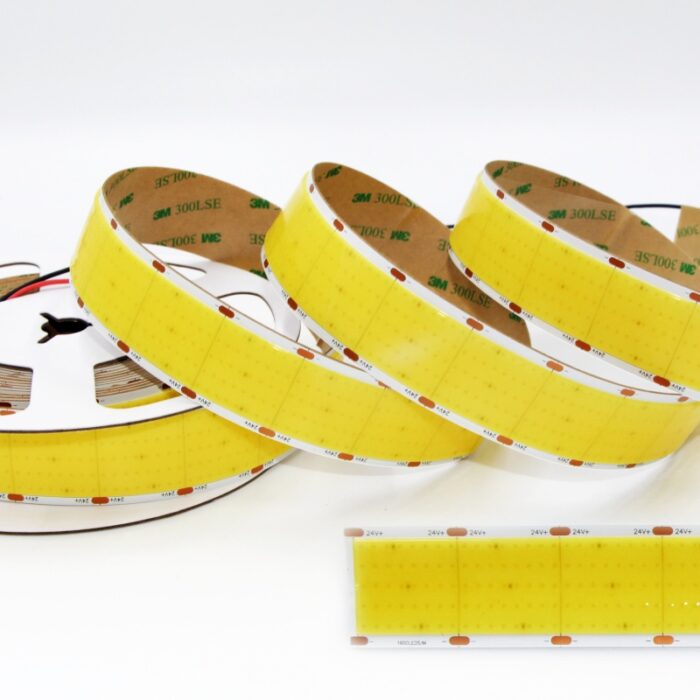
The backbar is the visual centerpiece of most bars, and strip lighting is what makes it work. Per-shelf LED strip lights each bottle row, front-lit so labels and glass read from across the room, with the mirror behind doubling the effect. According to industry observation, the specification details that separate professional backbars from improvised ones: high-density COB for dot-free light at viewing distance, per-shelf control so slower-moving shelves dim without relamping, and consistent color across every shelf — mixed whites on a backbar are immediately visible to every guest. Tiered shelving systems with integrated strip channels simplify both the build and the look.
Dining Areas: Coves, Perimeters, and Pendant Support
Dining areas layer strip lighting into coves, ceiling perimeters, and joinery — the warm ambient layer that makes guests comfortable staying for another course. According to industry observation, the specification point for dining strip lighting is the dimmed evening state: restaurants operate most hours at low, warm output, and cheap dimming reveals flicker and color shift exactly then. The specification should require high-frequency dimming performance at low levels, and the CCT should hold its rendered quality when dimmed — the pairing checks described in our flicker-free lighting guide apply directly to restaurant projects.
CCT Strategy for Food and Faces
Food and faces are the two subjects every restaurant lights, and they pull CCT in different directions. Warm 2700–3000K flatters wood, stone, and skin — the residential-feeling warmth dining venues want. Food display counters and open kitchens often add 3500–4000K zones where accuracy matters more than warmth. CRI 90+ keeps produce, plating, and guests rendering honestly. According to industry observation, the venues that solve this best layer both: warm ambient strip as the base, accurate accent zones where food is presented — and consistency between zones, because visible CCT shifts between dining and counter areas read as improvisation.
Operational Details Venues Demand
Venues run late, clean with liquids, and renovate on tight closures — and the specification should respect all three. Strips in bars need sealed or wipeable construction where sprays and spills reach. Drivers need accessible placement for service without closing the venue. Emergency and egress lighting requirements apply in dining areas. And venues renovate overnight: products with reliable availability and fast resupply matter, because a failed backbar strip on a Friday is an operational problem, not a maintenance ticket. According to industry observation, importers serving venue programs compete on resupply speed and documented durability as much as on price.
Frequently Asked Questions
Which CCT works best for bar backbars?
3000K is the dependable default that flatters spirits, glass, and faces, with RGB or tunable accents where venues want scene flexibility. Consistency across every shelf matters more than the exact temperature chosen.
What protection do bar and restaurant strips need?
Wipeable or sealed construction near counters and bars, IP54 or higher where cleaning sprays reach, and drivers placed accessibly outside splash zones. Durability requirements should follow the cleaning reality of the venue.
How is restaurant strip lighting best controlled?
With scenes: full task output for service prep, warm dimmed levels for service hours, and accent scenes for events. High-frequency dimming at low levels is the specification point, per the flicker discipline above.
Specifying strip lighting for a bar or restaurant program? GPD Technology manufactures COB and SMD LED strip lights in Shenzhen and supports venue fit-outs, importers, and distributors with high-density options, dimming-tested samples, and durable constructions. Contact our team to match strips to your venue’s atmosphere.
