
Office lighting is being rebuilt around strip-based systems: suspended linear lines that define open plans, indirect ceiling washes that replace glare-prone panels, and task integration that puts light where work happens. According to industry observation, office LED strip workspace lighting has shifted from a decorative accent to the primary specification in fit-outs — driven by wellbeing standards, ceiling design trends, and the move away from flat-panel grids. This guide covers the office applications, the specification details that matter for workspaces, and what importers and fit-out contractors should check before committing.
Suspended Linear Lines: The Open-Plan Standard
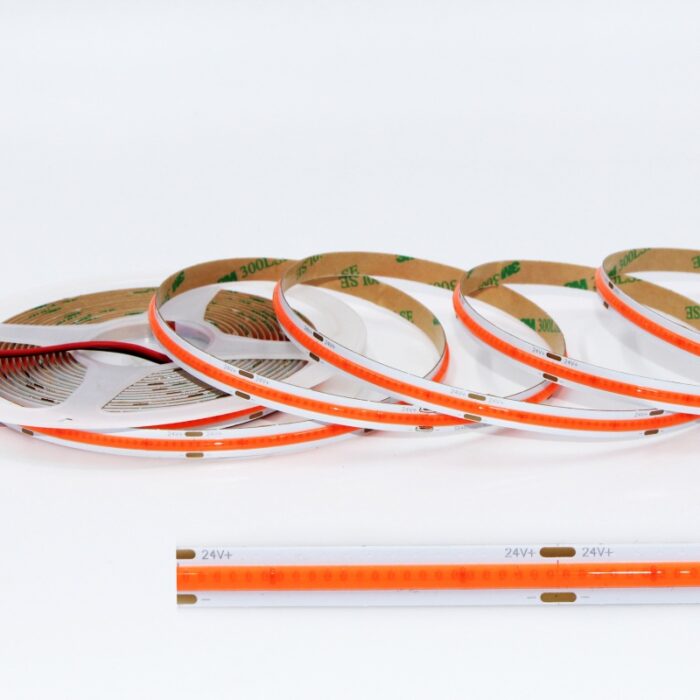
Suspended linear profiles with embedded high-density COB have become the open-plan office standard — continuous lines that define zones, replace panel grids, and integrate with acoustic and track systems. According to industry observation, the specification details that matter here: mounting height and spacing for even illumination across workpoints, uplight plus downlight combinations for ceiling illumination without glare, and efficacy documented at real operating temperature. The specification should also fix the suspension system and the joiner continuity for full-building line runs, where a visible break between profiles reads as a defect.
Indirect Ceiling Wash: Comfort Without Glare
Indirect lighting — strips washing the ceiling from suspended or wall-mounted channels — has become the comfort play in offices, because reflected light eliminates the direct glare that flat panels and downlights produce on screens. According to industry observation, indirect wash systems are increasingly specified alongside or instead of direct lines in meeting rooms and focus areas. The specification details that decide the result: reflectance of the ceiling surface, strip-to-ceiling distance, and the power budget for the indirect layer — all calculable before ordering, rather than adjusted after installation.
Task Integration: Light Where Work Happens
Beyond the ceiling layer, task integration puts strip lighting into desks, joinery, and acoustic systems — under-shelf task lines, acoustic-baffle integrations, and meeting room coves. According to industry observation, the trend direction is integration at the furniture level, mirroring the furniture and joinery programs covered in our furniture integration guide: office OEMs design the lighting in at the drawing stage, with wiring, sensors, and controls routed through the furniture system. For importers, office OEM programs are compact-format, volume-stable business — the same dynamics that made kitchen and wardrobe programs dependable.
Wellbeing, Control, and the Compliance Direction
Office specifications increasingly include wellbeing and control requirements that strip systems must meet. Flicker performance for camera and screen environments, tunable white for circadian-oriented workspaces, and scene control per zone are becoming standard asks. According to industry observation, European office projects also connect lighting to the broader compliance direction — efficacy documentation and sustainability data — a trend covered from the regulation side in our energy efficiency regulation guide. The specification should fix these requirements at tender stage, per the discipline in our tender guide, so products are selected against the full requirement set rather than price alone.
Frequently Asked Questions
Suspended linear lines or ceiling panels — which should an office fit-out choose?
According to industry observation, linear lines have taken the lead in modern fit-outs for their zoning flexibility, aesthetics, and integration with acoustic systems, while panels remain the budget option. The choice usually follows the design concept and ceiling architecture.
What strip density works for office task areas?
High-density COB suits close-range task integration and shallow profiles; standard densities suffice for suspended ambient lines with generous mounting height. State the mounting height and task locations so density can be verified.
Is tunable white worth specifying in offices?
For wellbeing-oriented and multishift workspaces, according to industry observation, yes — circadian-tuned scenes support comfort across the day. Fixed CCT remains the budget option for standard office programs.
Specifying strip lighting for an office fit-out program? GPD Technology manufactures COB and SMD LED strip lights in Shenzhen and supports office OEMs, fit-out contractors, and importers with linear formats, documented efficacy, tunable options, and specification review. Contact our team to match strips to your workspace program.

One thought on “LED Strip for Office Workspaces: Linear and Task Lighting”