

Architectural strip lighting succeeds or fails at the specification stage. When the written specification matches the installation reality, contractors install without surprises and the rendered light matches the designer’s intent. When it does not, the project absorbs the cost in rework, substitutions, and schedule risk. This architectural LED strip lighting specification guide walks through the decisions that belong in a professional specification — mounting and profiles, light quality, electrical and environmental requirements, and documentation — so importers, contractors, and designers can align on one clear document.
Start With the Installation Detail
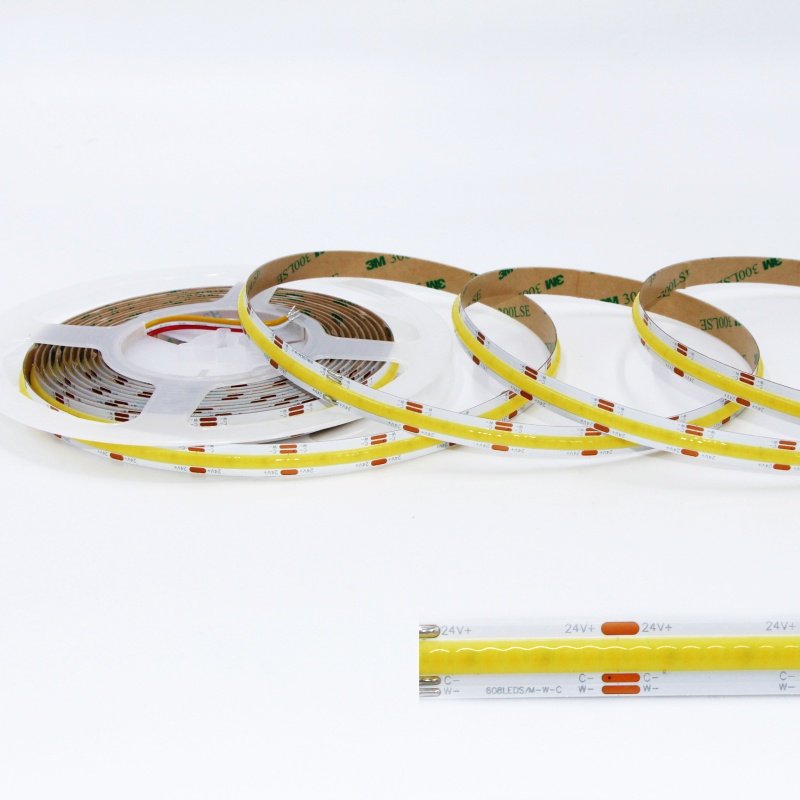
The first specification decision is physical: where and how the strip will be mounted. Coves and uplighting hide the source and forgive lower densities; exposed profiles in joinery, shelving, and display work demand high-density COB so no dots appear on reflective surfaces. Profile depth matters too — aluminum profiles act as heat sinks and shape the beam, while deeper diffusers increase the spacing at which the light source can sit from the surface. According to industry observation, most specification disputes trace back to this early section: a strip chosen without confirming profile depth, viewing distance, or bending radius almost always disappoints on site.
Light Quality: CCT, CRI, and Consistency
Correlated color temperature (CCT) should follow the space: warm 2700–3000K for hospitality and residential work, neutral 4000K for commercial and task areas. Color rendering comes next — CRI 90+ is now the standard expectation for retail and hospitality, supported by binning discipline so that one project does not mix visibly different whites across batches. For higher-spec projects, ask suppliers for TM-30 data rather than CRI alone. Consistency across production batches is the part most often left unspecified, and it is the part clients notice first when adjacent runs do not match.
Electrical and Environmental Requirements
Electrical specification keeps long runs predictable. Specify 24V for anything beyond short segments, calculate wattage per meter against driver capacity, and name the dimming method and driver standard so flicker is controlled rather than discovered. Environmental requirements follow the installation: IP20 for dry, accessible interiors; IP54 or higher for bathrooms and damp zones; IP65–IP67 for facades, landscapes, and wet locations. Certification expectations belong in the same section — the CE, UKCA, and NRTL documentation outlined in our EU and US certification guide should be referenced by model, not by family.
Documentation That Keeps Projects on Schedule
A specification is only as strong as the documents that accompany it. Professional submittals include photometric files (IES/LDT) for the exact configuration, wiring diagrams, the manufacturer’s Declaration of Conformity, and physical or digital mockups for color-critical areas. Specifying from a factory’s standard platforms — for example the high-density configurations in the COB LED strip range, such as the GPD COB 10mm 608 24V strip — shortens this stage because test data and files already exist. More selection background is available in our Technical Support knowledge base.
Frequently Asked Questions
What chip density should I specify for coves versus exposed profiles?
Hidden coves tolerate moderate densities because the source is diffused by distance. Exposed or closely reflected installations need high-density COB — commonly several hundred chips per meter — so the line reads continuous rather than dotted.
Should the specification fix one CCT for the whole project?
Usually yes for visual continuity across connected spaces, with deliberate exceptions for task or display areas. Fixing CCT and requiring batch consistency data prevents the mixed-whites effect between floors or phases.
How is dimming best specified for strip lights?
Name the control protocol, the driver, and the minimum load in the specification, and require flicker test data. Mixing strips and drivers without checking compatibility is a common cause of on-site disputes.
Specifying strip lighting for an architectural project? GPD Technology manufactures COB and SMD LED strip lights in Shenzhen and supports architects and contractors with samples, photometric data, and specification review. Contact our team to align your documents before procurement begins.
