

Every buying season, the questions importers ask about LED strip lights change a little, and this cycle is no exception. According to industry observation, LED strip light market trends over the past year point in one consistent direction: buyers are specifying higher build quality, tighter light uniformity, and documentation readiness — while efficiency rules and sourcing discipline quietly reshape product lines. For B2B buyers the practical question is not whether these trends continue, but how quickly to align specifications and sourcing plans with them. This article summarizes the shifts that matter for importers, contractors, and distributors, and the moves worth making now.
Demand Shifts Toward Higher Density and Better Light
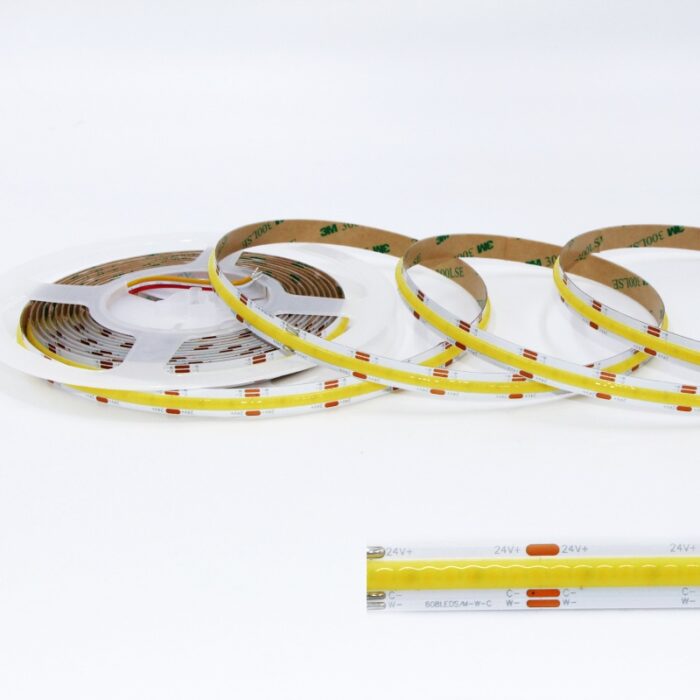
The clearest trend is the migration from entry-level SMD strips to high-density COB configurations in visible applications. Retail fit-outs, hotel corridors, joinery lighting, and residential renovations all reward dot-free illumination, and end clients increasingly recognize the difference. According to industry observation, replacement and renovation demand now drives a growing share of strip volume in mature markets — and renovation buyers tend to trade up rather than down. Products such as the GPD COB 10mm 608 24V strip exist precisely for this segment: high chip density in a slim profile for shallow profiles and exposed lines.
Efficiency Rules Are Reshaping Product Lines
Regulation is the second force. Ecodesign requirements in the EU and state-level efficiency programs in the US keep raising the bar for luminaires and, by extension, for the strip modules that go into them. According to industry observation, factories are responding with better drivers, higher-efficacy configurations, and cleaner data sheets. For buyers the practical effect is simple: efficacy and photometric data are no longer optional attachments to a quotation — they are selection criteria that will follow your product through its market life.
Pricing and the Sourcing Climate
On the sourcing side, the climate rewards planning. Raw material movement, holiday production calendars, and peak-season capacity all influence price and lead time, as covered in our earlier supply chain analysis. According to industry observation, buyers who share rolling forecasts with their factories consistently secure better capacity and more stable pricing than those who buy spot. The COB LED strip range is a good illustration of why specification continuity matters when you plan across seasons.
Regional Patterns Worth Tracking
Demand does not move in lockstep across regions, and blended market commentary can hide that. In Europe, renovation and energy-driven upgrades dominate, which favors high-efficacy, well-documented products. In the United States, residential decoration and commercial refreshes run on different cycles, and buyers expect NRTL-listed options for installed work. Project-driven markets in the Middle East and Australia tend to concentrate volume into fewer, larger tenders with strict IP and voltage requirements. According to industry observation, suppliers who keep regional variants — voltage, IP rating, CCT preferences — ready in their catalogs respond faster to these shifts without re-engineering product lines.
What Buyers Should Watch Next
- Density and uniformity tiers — chip-per-meter counts keep climbing; match density to profile depth instead of defaulting to the top option.
- Color quality expectations — CRI 90+ and consistent binning are becoming standard asks in commercial tenders.
- Specialized IP configurations — waterproof variants grow as outdoor and landscape applications expand; verify aging and IP test data.
- Certification readiness — keep EU and US documentation current with each model revision, as outlined in our certification guide.
More testing background and selection notes are collected in our Technical Support knowledge base.
Frequently Asked Questions
Is COB replacing SMD LED strip lights?
In visible and reflective applications, largely yes — that is where the demand shift is strongest. SMD remains common for coves, indirect lines, and budget segments where dots stay hidden.
Will strip light prices rise or fall this cycle?
According to industry observation, pricing tracks raw materials and capacity more than any single trend. Buyers with forecasts and agreed adjustment windows are the least exposed to surprises.
Which applications drive most demand growth?
Renovation and upgrade projects, retail and hospitality refreshes, and specialty applications — smart equipment, vehicles, and display lighting — keep adding volume on top of traditional decoration demand.
Do these trends change which certifications I need?
Indirectly, yes. As efficiency rules tighten and product categories evolve, certification scope can shift with each revision. Re-confirm documentation whenever you switch models, voltages, or factories rather than assuming last year’s paperwork still applies.
Following the market with a sourcing plan? GPD Technology manufactures COB and SMD LED strip lights in Shenzhen and supports importers, contractors, and distributors with specification guidance, samples, and documentation. Contact our team to align your next order with where the market is heading.
