

Healthcare lighting holds products to requirements that commercial projects never face: hygienic surfaces that survive cleaning chemicals, flicker performance that protects patients and staff, color rendering that supports clinical observation, and quiet reliability in spaces that operate continuously. According to industry observation, LED strip hospital and healthcare lighting has grown into a standard specification across patient rooms, nurses’ stations, corridors, and medical workplace applications — driven by LED technology’s low heat, dimming precision, and compact formats that fit the hygienic geometries healthcare demands. This guide covers the healthcare applications, the specification requirements, and what importers and contractors should verify before committing products to clinical environments.
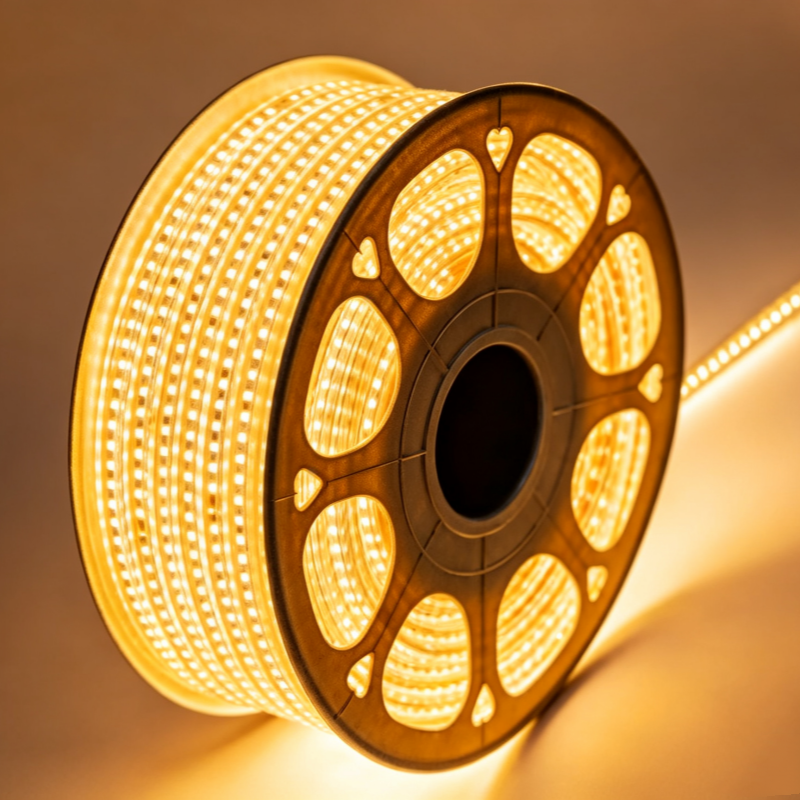
Hygiene and Cleanability: The Healthcare Baseline
Healthcare environments disinfect relentlessly, and lighting hardware must survive it. Sealed or encapsulated constructions that wipe clean without crevices, materials resistant to disinfectant chemicals, and IP-rated builds where washing reaches are the baseline. According to industry observation, exposed connectors and open PCB builds are the most common rejection points in healthcare lighting reviews — hygiene inspection treats crevices as infection risks. Sealed silicone constructions and profiles with closed diffusers pass where open builds fail, which makes construction choice a clinical requirement rather than an aesthetic one.
Flicker, Color, and Patient Comfort
Healthcare spaces run continuously, and lighting quality affects patients and staff differently. Flicker control is the hard requirement — patients spend long hours watching spaces where low-frequency flicker causes headaches and fatigue, and staff work under that light through entire shifts. Color rendering supports clinical observation: CRI 90+ where skin tone assessment matters, consistent CCT across patient areas. And dimmable, tunable configurations support circadian-oriented lighting that according to industry observation is growing in healthcare design — warmer night levels that protect patient sleep while keeping night-shift visibility. The flicker specification discipline from our flicker-free lighting guide applies directly to healthcare projects.
Reliability for Continuous Operation
Healthcare lighting runs continuously, and reliability requirements scale accordingly. Quality drivers with thermal protection, strips with documented lifetime under continuous operation, and redundant power planning for critical areas are the specification baseline. According to industry observation, healthcare retrofits often discover lifetime shortfalls from heat rather than from the LEDs themselves — strips in enclosed, continuously running installations need thermal planning or derating. Products documented for continuous operation, like the GPD COB 10mm 480D 24V strip with its published thermal and electrical data, let project teams verify continuous-operation suitability rather than assume it.
Compliance Documentation for Healthcare Procurement
Healthcare procurement reviews documentation more thoroughly than most markets, and the specification should anticipate it. Safety certifications matched to the destination market, material documentation for hygienic environments, photometric and flicker data at model level, and IP test evidence where sealed builds are specified. According to industry observation, the suppliers who pass healthcare procurement reviews are those with complete documentation — which is the same preparation that serves the broader compliance direction covered in our regulatory compliance update. Importers serving healthcare programs should expect deeper document requests than commercial markets and pre-package accordingly.
Frequently Asked Questions
Which IP rating do patient room strip lights need?
Patient rooms typically need sealed, cleanable constructions rather than high IP alone — IP44-class sealed builds with wipeable surfaces cover most patient area requirements, while wash-down zones need higher ratings per the cleaning protocol.
Why is flicker control critical in healthcare lighting?
Patients spend long hours in lit spaces and staff work entire shifts — low-frequency flicker causes headaches, fatigue, and visible strobing for sensitive occupants. High-frequency PWM or constant-current driving is the specification baseline.
What documentation do healthcare projects request?
Safety certifications, material and hygiene documentation, photometric and flicker data at model level, and IP test evidence where sealed builds are specified. According to industry observation, healthcare reviews go deeper than commercial documentation — preparation wins the specification.
Specifying strip lighting for healthcare environments? GPD Technology manufactures COB and SMD LED strip lights in Shenzhen with sealed constructions, flicker-verified driving, and documentation packages for healthcare projects. Contact our team to review products against your clinical requirements.
