Company News
LED Strip Distributor Market Opportunities: Where to Start
Where distributor market opportunities are opening in LED strip lighting — segments, product mix, and supplier programs that help distributors grow margin.
2026-10-12
LED Strip Color Consistency Binning Standard: Buyer Guide
How LED strip color consistency binning standards work — SDCM, binning practice, and the batch data to request so projects avoid mixed-white lighting.
2026-10-12
Linear LED Lighting Market Forecast: An Importer Guide
A practical linear LED lighting market forecast for importers: demand drivers, COB momentum, efficiency rules, and how to position catalogs for growth.
2026-10-10
Tunable White LED Strip Market Demand: An Importer View
Tunable white LED strip market demand is rising across hospitality, retail and workspace projects — what drives it and how importers should respond.
2026-10-09
IP Rated LED Strip Reliability Testing: Buyer Checklist
How IP rated LED strip reliability testing works — IP20 to IP68, aging, thermal cycling, waterproof checks — and the test data to request from suppliers.
2026-09-30
Architectural LED Strip Lighting Specification Guide
A practical architectural LED strip lighting specification guide: profiles, CCT and CRI, IP ratings, dimming, and the documentation architects expect.
2026-09-29
LED Strip Light Market Trends: What Buyers Should Watch
An importer-focused read on LED strip light market trends: demand shifts toward COB, efficiency rules, pricing climate, and what sourcing moves make sense.
2026-09-28
LED Strip OEM ODM Sourcing Insights: A Practical Guide
LED strip OEM ODM sourcing insights: how OEM and ODM differ, how to evaluate strip factories, which customizations matter, and how to protect your designs.
2026-09-24
LED Strip Supply Chain Analysis: What Importers Should Know
LED strip supply chain analysis for importers: chip and FPC sourcing, lead times, cost drivers, and how to secure a resilient sourcing plan.
2026-09-23
LED Strip Certification Requirements EU US: Buyer Guide
Understand LED strip certification requirements for EU and US markets — CE, UKCA, RoHS, UL or ETL — and prepare compliant documentation before importing.
2026-09-22
COB LED Strip Technology Development: A B2B Guide
See how COB LED strip technology development delivers dot-free light, higher density and reliability, and what B2B buyers should check before sourcing.
2026-09-21
GPD LED Strip Lights Add a Touch of Brilliance to the Home
GPD LED strip lights add a touch of brilliance to the home, mainly in the following aspects: Ambient Lighting: LED
2026-09-16
GPD LED Strip Lights: Innovative Technology Illuminating the Future
Since its establishment, Shenzhen GPD Technology Co., Ltd. has focused on the R&D, manufacturing, and sales of LED strip lights,
2026-09-11
Dimmable LED Strip Lights: Adjustable Brightness for Every Mood & Scene
Fixed-brightness lighting often limits the comfort of your living space — too bright for relaxation and too dim for daily
2026-09-09
24V LED Strip Lights: Stable, High-Brightness Lighting for Long Runs
When upgrading your home or commercial lighting, voltage stability is key to smooth, flicker-free illumination. While 12V LED strips work
2026-09-07
What Is CRI? Why High CRI COB LED Strips Elevate Your Lighting Projects
When sourcing premium LED strip lights for commercial, residential, and architectural lighting, you have likely encountered the term CRI. Many
2026-08-25
GPD LED Strip Lights Add a Touch of Brilliance to the Home
GPD LED strip lights add a touch of brilliance to the home, mainly in the following aspects: Ambient Lighting: LED strips can serve as a primary ambient lighting tool, providing soft and even light that helps create a comfortable, cozy home atmosphere. This lighting approach suits modern home decor styles, emphasizing the integration of light effects and furniture, and has largely replaced traditional bulb lighting. Decorative Effect: LED strips offer a variety of color and lighting-effect options, such as color changing, gradients, and flashing, which can create diverse decorative effects and add interest to living spaces. For example, by choosing red...
2024-04-21
Innovative Lighting Technology: GPD LED Strip Lights Lead the Trend
As a representative of innovative lighting technology, the reasons why GPD LED strip lights lead the trend can be analyzed from multiple perspectives. First, the global LED strip market continues to grow and is expected to maintain steady expansion in the coming years. This demonstrates the worldwide recognition and application of LED lighting technology, providing ample market space for companies such as GPD. Trends in LED lighting technology include higher voltage operation, intelligentization, and deep integration with information technology. These advances not only improve LED strip performance—such as continuously rising luminous efficacy—but also make LED lighting products more energy-efficient, eco-friendly, and reliable.
2024-04-21
An Energy-Saving, Eco-Friendly New Choice: GPD LED Strip Lights Take the Stage
As an energy-saving and eco-friendly new choice, GPD LED strip lights owe their debut to the continuous advancement of LED technology and growing market demand. According to relevant reports, the global LED strip light market was valued at approximately USD 54.1788 billion in 2021 and is projected to reach USD 81.23036 billion by 2027, with a CAGR of 6.98% during the forecast period. This data indicates steady growth in the LED strip market, reflecting the widespread adoption and acceptance of LED lighting technology. Shenzhen GPD Technology Co., Ltd., as a company focused on LED luminaires, LED strip lights, and other products...
2024-04-21
Certified Under the Quality Management System and Awarded the Certificate
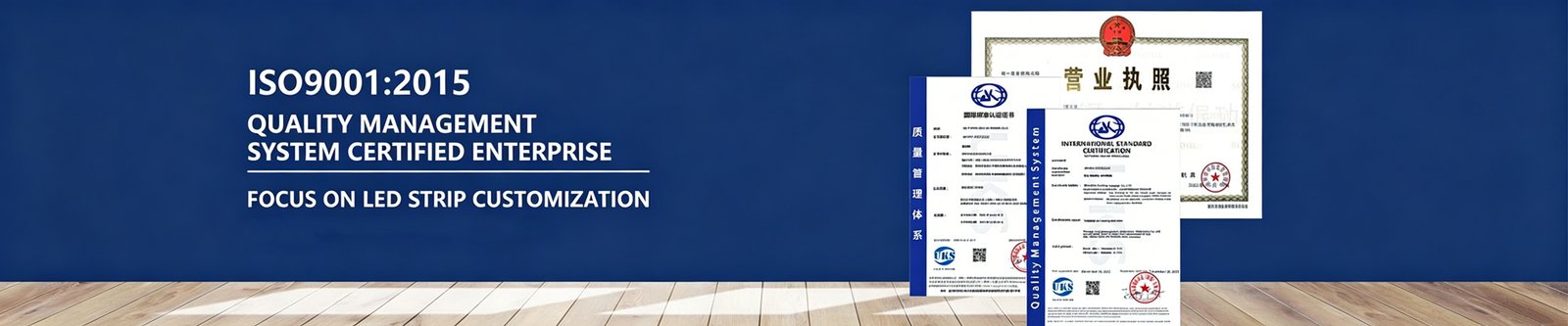
To further standardize the company's production, R&D, and sales operations, effectively control risks, and improve return on investment, thereby establishing a standardized operation and management model, the company took a strategic approach and began implementing the ISO 9001 Quality Management System in 2016. It successfully passed the certification and audit of the ISO 9001 Quality Management System by the China Quality Certification Centre, and was awarded the ISO 9001 Quality Management System certificate on July 27, 2017. On September 23-24, 2016, an on-site inspection and acceptance for the quality management system certification was organized by the Guangdong Certification and Review Centre.
2024-04-21
Becoming an Institutional Member of the China Entertainment Technology Association
On June 20, 2017, Shenzhen GPD Technology Co., Ltd. officially joined the China Entertainment Technology Association (CETA) as an institutional member, marking a new level of the company's technical strength and overall capability, and gaining recognition from industry peers. The China Entertainment Technology Association is the most authoritative technical association in the industry! Founded in 1991 and supervised by the Ministry of Culture of the PRC, CETA is a national first-tier social organization with legal personality, serving as the authoritative representative body of China's entertainment equipment industry and leading the coordination of the nation's entertainment equipment economic and technological development; the Ministry of Civil Affairs...
2024-04-21
GPD LED Strip Lights Illuminate the Brilliance of Life
GPD LED strip lights add brilliant splendor to everyday life with their premium quality and diversified product range. LED strips are widely used in applications including, but not limited to, residential decoration, hotel accent lighting, retail display and point-of-purchase lighting, outdoor construction lighting, as well as transportation sectors such as aviation and vehicle lighting zones, traffic signals, and road signage. Moreover, the use of LED strips in the medical field should not be overlooked, including operating rooms, interior lighting, and bedside lighting. GPD LED strip lights are designed with energy efficiency, long lifespan, and excellent display performance in mind, making them the preferred choice for display across various occasions.
2024-04-21
LED Strip Distributor Market Opportunities: Where to Start
Distributors sit at the most competitive point of the LED strip trade — squeezed by factory pricing on one side and project expectations on the other. Yet according to industry observation, the distributors growing fastest through this cycle are not the ones discounting deepest. They are the ones reading where LED strip distributor market opportunities are actually opening: renovation-driven replacement demand, tunable and COB upgrade cycles, and specification-driven commercial work. This article maps those openings and the practical steps — product mix, supplier programs, and margin levers — that turn them into sustainable profit, plus the distribution models that fit different customer bases.
Where Demand Is Opening Up
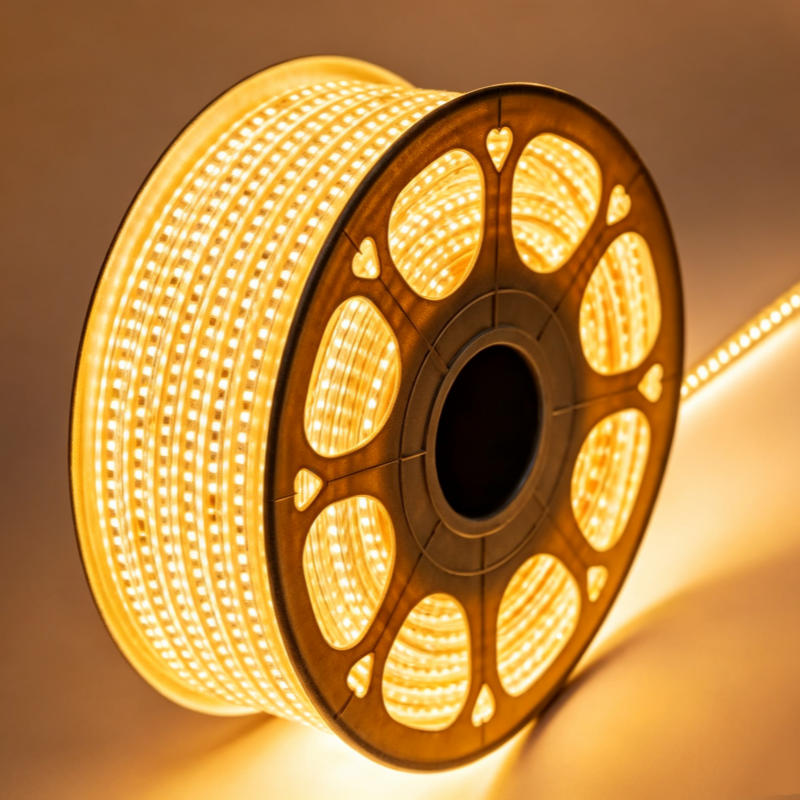
Three openings deserve attention now. Renovation and retrofit continues to convert old halogen and fluorescent installations into linear LED — a segment that rewards distributors stocking standard 12V and 24V COB configurations with short replenishment cycles. Commercial spec work keeps pulling high-density COB and tunable white into projects, growing the upper tier of the catalog. And high-voltage direct-wire lines — products like the GPD 2835 high-voltage strip series — serve long-run installations where drivers are impractical, a niche with fewer competing SKUs and steadier margins.
Product Mix That Moves the Needle
According to industry observation, distributors trimming their range to “cheap and long” are losing ground to those structuring it in three tiers: volume-grade fixed-CCT strips for price-driven buyers, high-density COB strip lights for quality-driven projects, and specialty lines — tunable white, waterproof, high-voltage — for specification-driven work. Each tier answers a different customer conversation, and together they lift average order value without multiplying suppliers.
Supplier Programs Worth Negotiating
Beyond unit price, several factory programs change distributor economics: forecast-based production reservations that lock capacity for peak season; per-batch color and IP documentation that reduces project disputes (the binning discipline covered in our color consistency guide); private-label reels and packaging that build brand equity; and sample support that shortens the path from inquiry to first order. According to industry observation, distributors who formalize these terms annually — rather than accepting defaults — report smoother inventory and better gross margin stability.
Two Distribution Models, Two Factory Conversations
Project-focused distributors serve contractors and designers: their inventory leans on standard COB configurations with reliable replenishment, and their value is speed, documentation, and technical answers. Catalog-focused distributors serve retail and e-commerce buyers: their needs center on private-label packaging, content-ready product information, and stable consumer-grade configurations. According to industry observation, the factory conversation changes accordingly — the first model is about capacity reservations and batch consistency terms, the second about packaging tooling, labeling, and marketing support. Knowing which model fits your customer base sharpens every later negotiation with the factory.
Margin Levers Beyond Price
Price is the bluntest lever in distribution. Sharper ones include: complete documentation packages that let customers approve faster; technical answers sourced from the factory’s engineering knowledge base instead of generic replies; and bundled configurations (strip plus profile plus driver) that raise order value while simplifying the buyer’s purchasing. Distributors who publish this kind of guidance — not just product listings — increasingly win the specification conversations that used to belong to lighting designers alone.
Frequently Asked Questions
Which LED strip segments offer the best distributor margin today?
According to industry observation, high-density COB and tunable white carry better margins than volume-grade fixed-CCT strips, while high-voltage and waterproof lines offer steadier demand with fewer competing SKUs.
How much stock is sensible for a new strip program?
Start with standard configurations in one or two best-selling CCTs, hold safety stock on those, and place custom configurations against confirmed orders. Forecast-sharing with the factory keeps replenishment predictable.
What should a distributor ask a new supplier for first?
Documentation samples, per-batch quality data, and a trial production slot. A supplier’s willingness to provide these signals how the partnership will run when volumes grow.
Can a distributor require regional exclusivity from a factory?
Sometimes. Private-label and custom configurations are commonly granted regional exclusivity against volume commitments, while standard catalog items rarely are. Separate the two in the agreement so exclusivity is tied to what genuinely belongs to you.
Growing your LED strip distribution business? GPD Technology partners with distributors worldwide on COB and SMD strip programs — forecast reservations, private-label options, per-batch documentation, and sample support included. Contact our team to discuss a program built around your market.
LED Strip Color Consistency Binning Standard: Buyer Guide
Few strip light complaints are as expensive as mixed whites: a hotel corridor where one floor reads warmer than the next, or a retail wall where two runs of the “same” product visibly disagree. According to industry observation, these cases usually trace back to one skipped step — color binning discipline. This guide explains how the LED strip color consistency binning standard works in practice, why identical-looking datasheets can still produce different whites, and the batch data buyers should request so projects never mix visibly different light.
What Binning Actually Means
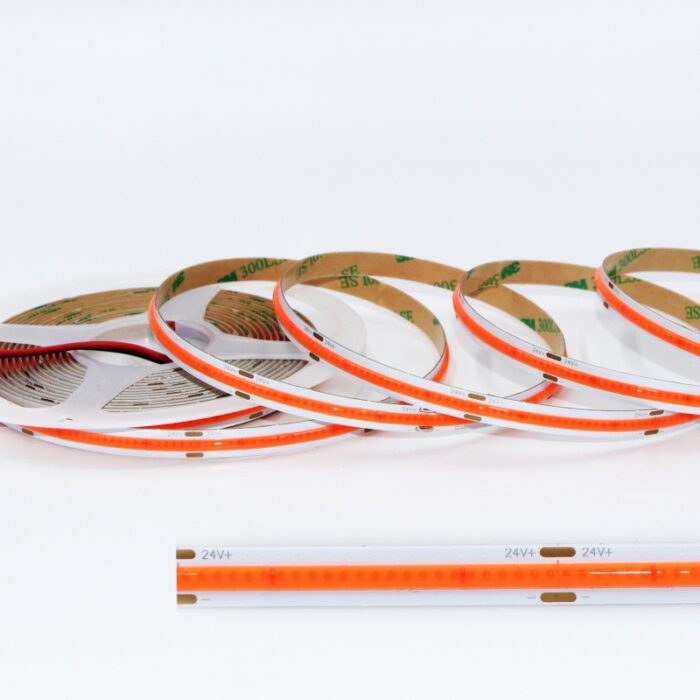
LED chips are never perfectly identical. Manufacturing variations place every chip somewhere on a range of color temperature, brightness, and forward voltage — and binning is the factory’s act of sorting those chips into groups. The industry describes tightness in MacAdam ellipses (SDCM): a 3-step bin means the color deviation is small enough that most observers cannot distinguish two adjacent groups side by side, while 5-step and wider bins produce whites that trained eyes — and increasingly, untrained eyes — can tell apart. For strip lights, binning discipline extends beyond the chips: the phosphor mix applied over COB lines and the quality of downstream assembly must hold the sorted chips within their promised window.
Why Strips From the Same Factory Can Still Look Different
Even with sorted chips, several points in the chain can drift. Chip suppliers revise their own processes, so this quarter’s “same” chip may sit in a slightly different bin than last quarter’s. Phosphor and coating batches vary. And on long production runs, equipment warm-up and material changeovers shift output at the margins. COB construction helps — the continuous phosphor layer blends small chip-level differences — but according to industry observation it reduces visible variation rather than eliminating the need for binning. High-density COB strip lights still depend on their chips being sorted and matched before bonding.
The Batch Data Buyers Should Request
Binning claims belong in documentation, not in sales conversations. Before scaling an order, professional buyers ask for:
- Per-batch SDCM values — the measured color deviation of the actual production batch, not a generic family specification.
- CRI or TM-30 data at the ordered CCT — for tunable products, at both ends of the range.
- Adjacent-reel photos — reels from the same run lit side by side, which reveal seams faster than numbers.
- Locked CCT windows per order — a written commitment that repeat orders ship from the same binning window as the approved sample.
A practical benchmark: the GPD COB 10mm 480D 24V strip and the wider COB LED strip range are supported by exactly this style of batch documentation — the depth that keeps multi-phase projects consistent from first floor to last.
Turning Binning Into a Contract Term
The strongest buyers convert binning from a hope into a term of trade. Specify the maximum SDCM in the purchase order, name the approved sample reel as the reference standard, and require re-confirmation whenever production moves to new materials or a new production date. Keeping the approved reel on hand at the factory — rather than only in your warehouse — makes every later shipment comparable against the same physical target. According to industry observation, suppliers respond well to this structure — it gives their production teams a clear target and removes the ambiguity that turns small color shifts into large disputes.
Frequently Asked Questions
What SDCM should I accept for my project?
For most indoor applications, 3-step SDCM is the professional expectation. Retail, hospitality, and any installation where two runs sit adjacent justify requesting tighter windows or single-batch supply.
Does COB construction remove the need for binning?
No. The phosphor layer blends chip-level differences into a smooth line, but if the underlying chips span a wide bin range, the overall tone still drifts between batches.
Why did two orders of the same strip look different?
Most often the two orders were produced from different binning windows or different production dates. A locked binning window in the purchase order prevents exactly this scenario.
Do tunable white strips have the same binning concerns?
Even more so — both channels must stay matched as they age, or the tuned point drifts. Ask tunable suppliers for binning data at both CCT extremes, not just one.
Need color-consistent strip lights across batches and projects? GPD Technology manufactures COB and SMD LED strip lights in Shenzhen with per-batch binning control and documentation, supporting importers, contractors, and distributors. Contact our team for samples and specification data.
Linear LED Lighting Market Forecast: An Importer Guide
Linear lighting continues to take share from traditional fixtures in commercial and residential projects, and strip-based systems are the engine behind that shift. For importers and distributors planning next year’s catalogs, a grounded linear LED lighting market forecast matters more than ever: it decides which configurations to stock, which certifications to prioritize, and how much flexibility to build into supplier agreements. According to industry observation, demand growth remains steady across architecture, retail, and industrial renovation — with the interesting changes happening in product mix rather than total volume. This forecast-style analysis walks through the drivers, the product trends, and the sourcing implications worth acting on now — with the caveat that regional regulation and freight conditions, not global averages, will decide each buyer’s actual numbers.
Demand Drivers: Renovation, Retail, and Architecture
Three demand streams keep linear LED lighting growing. Architectural and commercial renovation replaces outdated fluorescent and halogen fixtures with continuous lines of light — a segment that rewards slim profiles and seamless output. Retail and hospitality refresh cycles favor adjustable, scene-capable lighting, pulling tunable and addressable options into the mix. And industrial spaces — warehouses, workshops, parking — convert to linear LED for maintenance savings. According to industry observation, renovation-driven demand is the most resilient of the three, because it is triggered by building age and energy costs rather than discretionary budgets.
Product Mix: Where the Volume Is Moving
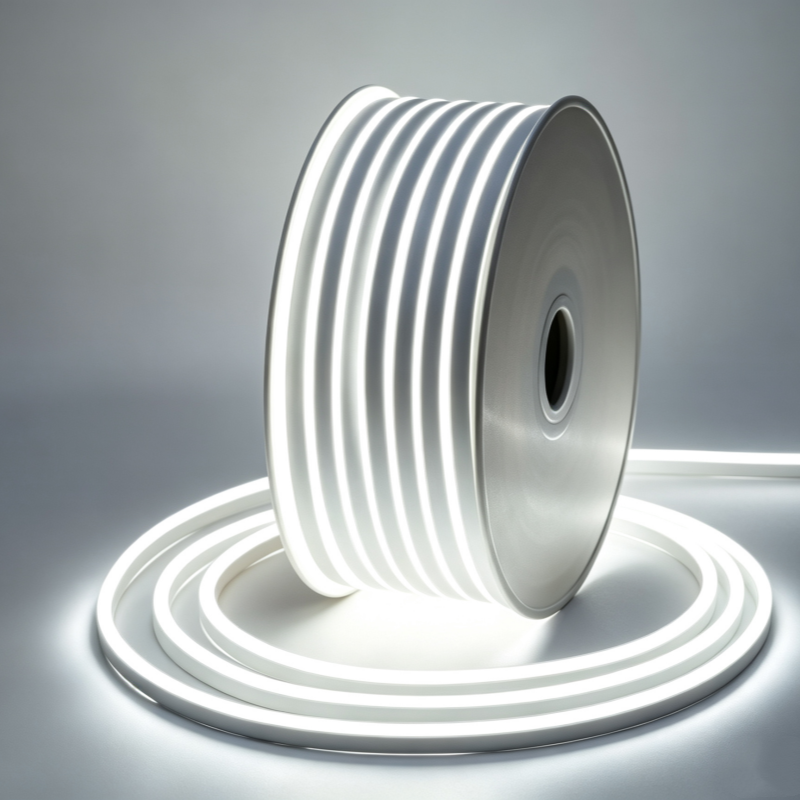
Within linear lighting, the mix keeps shifting toward higher performance and simpler installation. High-density COB constructions dominate new specifications for visible runs, while high-voltage direct-wire strips — such as the GPD 230V neon and rigid strip series — grow in projects that want driver-free installation and long continuous runs without voltage drop. Waterproof neon-style lines expand outdoor and facade applications. According to industry observation, buyers increasingly consolidate onto fewer platforms with more configuration options, which favors suppliers with broad, documented ranges like the COB LED strip family.
Efficiency Rules and Certification Momentum
Regulation continues to reshape the market from the specification side. Ecodesign requirements in Europe, state-level efficiency programs in the US, and similar tightening across the Middle East and Asia keep raising efficacy floors and documentation expectations. For linear lighting this translates into practical demands: better lumen-per-watt figures, photometric files for exact configurations, and Declarations of Conformity that match ordered models. Importers who treat certification readiness as part of the product — rather than an afterthought — move faster through tenders and retail onboarding alike, a discipline introduced in our EU and US certification guide.
Regional Patterns Worth Tracking
Demand does not move in lockstep across regions, and blended market commentary can hide that. In Europe, renovation and energy-driven upgrades dominate, which favors high-efficacy, well-documented products. In the United States, residential decoration and commercial refreshes run on different cycles, and buyers expect NRTL-listed options for installed work. Project-driven markets in the Middle East and Australia tend to concentrate volume into fewer, larger tenders with strict IP and voltage requirements. According to industry observation, suppliers who keep regional variants — voltage, IP rating, CCT preferences — ready in their catalogs respond faster to these shifts without re-engineering product lines.
Sourcing Implications for the Coming Cycle
The forecast for buyers is less about predicting a number and more about positioning. According to industry observation, suppliers with vertically organized production and rolling material purchases consistently deliver shorter lead times and more stable pricing through demand peaks. The practical moves: share rolling forecasts early, qualify alternates within a supplier’s range so disruptions do not stall projects, and hold safety stock on fast-moving SKUs while ordering custom configurations against confirmed demand. Buyers who ran this playbook through the last two cycles report smoother inventory and fewer emergency air shipments.
Frequently Asked Questions
Is linear LED lighting still growing, or is the market saturated?
According to industry observation, growth continues, driven by renovation conversions and the expansion of linear formats into outdoor, facade, and furniture applications. The mix shifts toward COB and higher-efficacy products even where total volume grows modestly.
Which product type should importers prioritize for next year?
High-density COB for visible architectural runs, high-voltage direct-wire strips for long seamless installations, and waterproof neon-style lines for outdoor — three segments that consistently appear in project demand.
How should pricing be planned against this forecast?
Agree adjustment windows tied to material indices with suppliers, and lock volumes for peak-season capacity early. Spot buying remains the most expensive way to serve a growing segment.
How does the high-voltage segment fit into the forecast?
It keeps a solid niche in long-run, driver-free installations — facades, coves in concrete, and retrofit projects where access to drivers is difficult. According to industry observation, 230V direct-wire lines hold their position exactly because they simplify installation, even as low-voltage COB wins the premium visible segment.
Positioning your catalog for the linear lighting cycle? GPD Technology manufactures COB, SMD, and high-voltage linear strip lights in Shenzhen, supporting forecast-based production, OEM configurations, and full documentation for importers and distributors. Contact our team to align your next-season plan.
Tunable White LED Strip Market Demand: An Importer View
Among the product decisions importers are weighing this year, few have moved as fast as tunable white. A strip that once offered a fixed 3000K now adjusts across roughly 2700–6500K, letting one installation serve morning, evening, and merchandising scenes alike. According to industry observation, tunable white LED strip market demand has grown from a hospitality niche into a mainstream line item for offices, retail, and high-end residential — and importers who understood the product a year ago are now fielding questions from clients who barely knew the category existed. This article looks at what is driving that demand and how to respond to it commercially.

What Is Driving Demand for Tunable White?
Three forces stand out. Hospitality brands increasingly tune lighting between warm daytime tones and brighter, cooler settings for events and breakfast service — one installation, several scenes. Workspaces follow wellbeing-oriented design guidance that shifts cooler light into the morning and warmer light toward the end of the day. And retail merchandising uses CCT changes to flatter different product lines without refitting. According to industry observation, these are no longer flagship-only requests: mid-range hotels and regional retail chains now ask for tunable white LED strip lights by name.
What Buyers Are Actually Specifying
In practice, most demand concentrates in two-channel (warm plus cool) constant-voltage strips, with RGB+CCT as the premium option where color scenes matter. Typical specifications favor 24V layouts for longer runs, high-density COB constructions for dot-free exposure, and CRI 90+ so the light reads well on skin tones and merchandise. Control compatibility is the second half of the specification — 0-10V and DALI in commercial projects, RF remotes and app-based ecosystems in residential — and buyers increasingly confirm controller matching at sampling rather than discovering conflicts on site. Compact formats matter too: slim profiles such as the GPD COB 3mm 400D 12V strip serve joinery and shelf applications where full-size reels will not fit.
Sourcing Considerations Before You Commit
Tunable white adds a matching problem that fixed-CCT products do not have: both channels must age, dim, and hold color together. Before committing, buyers should verify:
- Mixed-light quality — samples lit at 2700K, 4000K, and 6500K simultaneously should blend without a visible seam or color patchiness.
- Consistency between channels — warm and cool chips must age at similar rates, or the tuned point drifts over time.
- Control compatibility — confirm the strip’s channel wiring and current draw against the controllers your market actually sells.
- CRI across the tuning range — CRI measured only at one CCT is not enough for retail and hospitality work.
The COB LED strip range illustrates the specification depth behind these checks, and our Technical Support knowledge base collects the testing notes behind them.
Where the Market Is Heading
According to industry observation, the price gap between tunable white and fixed-CCT strips keeps narrowing as two-channel COB designs mature, which pulls the product into more mainstream projects each season. Human-centric lighting language now appears in office fit-out specifications that would not have mentioned it two years ago, and smart-home ecosystems continue to normalize app-based CCT control for residential buyers. For importers and distributors, tunable white has become a practical differentiation play: stock it, understand it, and it opens conversations that fixed-CCT catalogs no longer start. The buyers who benefit most treat tunable white not as a novelty SKU but as a second lighting language their catalog can speak alongside fixed CCT.
Frequently Asked Questions
Is tunable white the same as RGB LED strip?
No. Tunable white adjusts only color temperature along the warm-cool axis, which suits architectural and workspace lighting. RGB adds saturated colors for effect lighting; RGB+CCT combines both in one product.
Does tunable white cost much more than fixed CCT?
According to industry observation, the gap has narrowed as two-channel designs mature. Premiums remain, but they are smaller than the scene-flexibility value many hospitality and retail clients assign to them.
What should I check in samples before scaling an order?
Light samples at both CCT extremes and mid-point, check mixed-light uniformity, dim-to-warm behavior at low output, and confirm the strips work with the controllers sold in your market.
Which configurations are most common in project orders?
Two-channel 24V layouts with CRI 90+ and mid-to-high densities dominate commercial orders, while residential programs lean on compact 12V formats for joinery and display work. Confirming cut points and connector types up front avoids rework later.
Adding tunable white to your catalog? GPD Technology manufactures tunable and fixed-CCT COB LED strip lights in Shenzhen, supporting OEM configurations, controller-matched samples, and documentation for importers and distributors. Contact our team to discuss your program.
IP Rated LED Strip Reliability Testing: Buyer Checklist
An IP rating printed on a datasheet is a claim; reliability is what happens after six months of humidity, heat cycles, and handling on site. According to industry observation, most waterproof strip failures traced back by importers were not mysterious — they were ingress points that a proper test would have exposed before shipment. This guide explains what IP rated LED strip reliability testing actually covers, how capable factories verify waterproof designs, and which test data buyers should request before committing to an order.
What IP Ratings Mean — and What They Do Not
The IP code has two digits: the first grades protection against solids, the second against water. For strip lights the common tiers are IP20 for dry interiors, IP54 for damp locations, IP65 for splash-exposed runs, and IP67/IP68 for soak-prone or outdoor installations. What the rating does not describe is lifetime. A strip can pass a water ingress test once and still fail early if the encapsulation overheats, the adhesive creeps, or the end caps separate under thermal cycling. Reliability, in other words, is the rating plus everything around it.
How Capable Factories Test Waterproof Strips
Serious factories verify IP designs with a sequence rather than a single check: water column or spray testing per the declared grade, soak tests for IP67/IP68 builds, then power-on aging of sealed reels so failures surface under real electrical load. According to industry observation, aging is where weak encapsulation and poor end-cap bonding reveal themselves — which is why factories that run full-reel powered aging can catch defects that a visual inspection never will. Thermal cycling between hot and cold chambers adds another layer, especially for outdoor configurations that expand and contract daily in service.
The Test Data to Request From Suppliers
Buyers should treat test documentation as a deliverable, not a courtesy. Before placing an order, request:
- Model-matched IP test reports — the report must reference the exact product and voltage you are buying, not a similar family.
- Aging records — powered aging duration and sampling method, ideally with photos of the aged reels.
- Thermal and insulation data — dielectric strength or insulation resistance results for sealed builds.
- Batch-level consistency — how IP integrity is verified across production runs, since one passing sample does not describe a shipment.
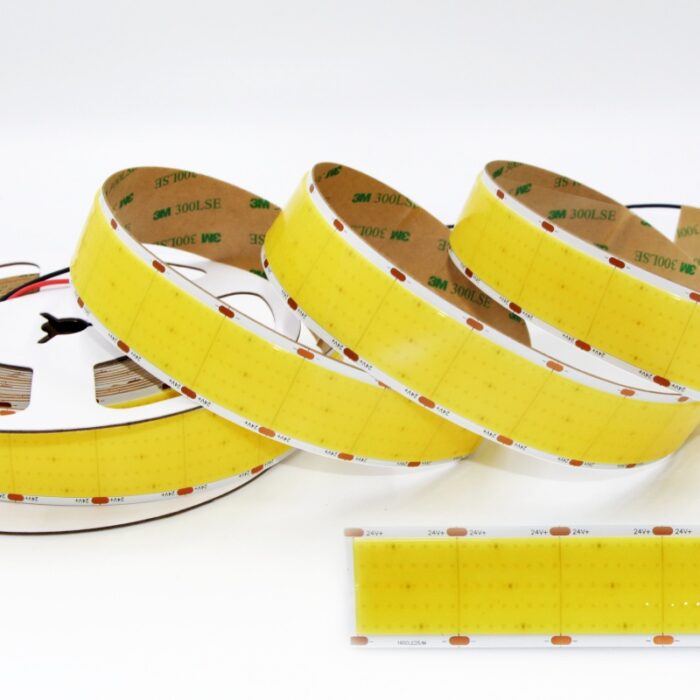
A useful reference point: the GPD COB 30mm 1600D 24V 40W strip and the wider COB LED strip range are supported by this style of documentation, which is what allows buyers to match certificates to models — the discipline described in our EU and US certification guide.
Red Flags Buyers Should Watch
Several patterns deserve caution. Generic reports with no model number or photos. IP68 claims on strips whose end caps are sealed by glue alone without mechanical retention. Prices far below comparable waterproof builds — sealing materials and testing cost money, and the difference shows up somewhere. And factories that cannot explain their own test sequence in a call. None of these proves a bad product, but together they predict the complaints that surface after installation rather than before shipment.
Frequently Asked Questions
Is IP68 always better than IP65?
Not automatically. IP68 describes soak protection, often with a permanently sealed build that can be harder to cut and terminate. IP65 suits splash-exposed runs; choose by installation reality, not by the biggest number.
Can IP20 strips be used outdoors inside profiles?
Yes, when the profile system provides the protection — with rated end caps and diffuser sealing. The specification should then describe the assembled system, because the strip alone no longer defines ingress protection.
How is reliability verified after delivery?
On receipt, buyers commonly sample-test lengths for ingress and insulation, then power-age a portion of the shipment. Any failure pattern should be raised with the supplier against the agreed test reports.
Sourcing IP-rated COB strip lights and need the test data to match? GPD Technology manufactures COB and SMD strip lights in Shenzhen with in-house aging and waterproof verification, supporting importers and contractors with model-matched reports. Contact our team to request samples and documentation.
Architectural LED Strip Lighting Specification Guide
Architectural strip lighting succeeds or fails at the specification stage. When the written specification matches the installation reality, contractors install without surprises and the rendered light matches the designer’s intent. When it does not, the project absorbs the cost in rework, substitutions, and schedule risk. This architectural LED strip lighting specification guide walks through the decisions that belong in a professional specification — mounting and profiles, light quality, electrical and environmental requirements, and documentation — so importers, contractors, and designers can align on one clear document.
Start With the Installation Detail
The first specification decision is physical: where and how the strip will be mounted. Coves and uplighting hide the source and forgive lower densities; exposed profiles in joinery, shelving, and display work demand high-density COB so no dots appear on reflective surfaces. Profile depth matters too — aluminum profiles act as heat sinks and shape the beam, while deeper diffusers increase the spacing at which the light source can sit from the surface. According to industry observation, most specification disputes trace back to this early section: a strip chosen without confirming profile depth, viewing distance, or bending radius almost always disappoints on site.
Light Quality: CCT, CRI, and Consistency
Correlated color temperature (CCT) should follow the space: warm 2700–3000K for hospitality and residential work, neutral 4000K for commercial and task areas. Color rendering comes next — CRI 90+ is now the standard expectation for retail and hospitality, supported by binning discipline so that one project does not mix visibly different whites across batches. For higher-spec projects, ask suppliers for TM-30 data rather than CRI alone. Consistency across production batches is the part most often left unspecified, and it is the part clients notice first when adjacent runs do not match.
Electrical and Environmental Requirements
Electrical specification keeps long runs predictable. Specify 24V for anything beyond short segments, calculate wattage per meter against driver capacity, and name the dimming method and driver standard so flicker is controlled rather than discovered. Environmental requirements follow the installation: IP20 for dry, accessible interiors; IP54 or higher for bathrooms and damp zones; IP65–IP67 for facades, landscapes, and wet locations. Certification expectations belong in the same section — the CE, UKCA, and NRTL documentation outlined in our EU and US certification guide should be referenced by model, not by family.
Documentation That Keeps Projects on Schedule
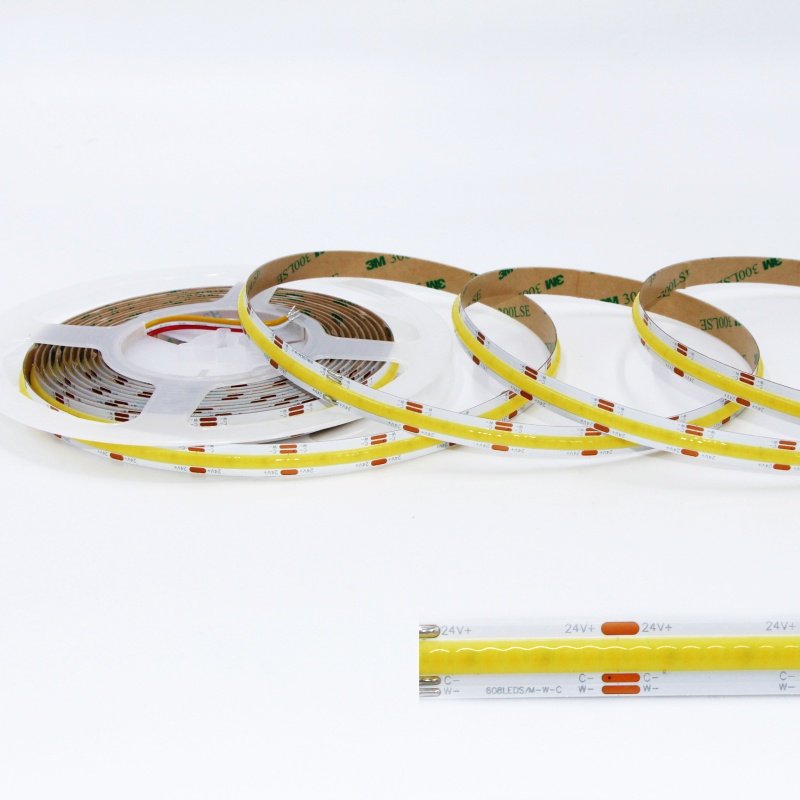
A specification is only as strong as the documents that accompany it. Professional submittals include photometric files (IES/LDT) for the exact configuration, wiring diagrams, the manufacturer’s Declaration of Conformity, and physical or digital mockups for color-critical areas. Specifying from a factory’s standard platforms — for example the high-density configurations in the COB LED strip range, such as the GPD COB 10mm 608 24V strip — shortens this stage because test data and files already exist. More selection background is available in our Technical Support knowledge base.
Frequently Asked Questions
What chip density should I specify for coves versus exposed profiles?
Hidden coves tolerate moderate densities because the source is diffused by distance. Exposed or closely reflected installations need high-density COB — commonly several hundred chips per meter — so the line reads continuous rather than dotted.
Should the specification fix one CCT for the whole project?
Usually yes for visual continuity across connected spaces, with deliberate exceptions for task or display areas. Fixing CCT and requiring batch consistency data prevents the mixed-whites effect between floors or phases.
How is dimming best specified for strip lights?
Name the control protocol, the driver, and the minimum load in the specification, and require flicker test data. Mixing strips and drivers without checking compatibility is a common cause of on-site disputes.
Specifying strip lighting for an architectural project? GPD Technology manufactures COB and SMD LED strip lights in Shenzhen and supports architects and contractors with samples, photometric data, and specification review. Contact our team to align your documents before procurement begins.
LED Strip Light Market Trends: What Buyers Should Watch
Every buying season, the questions importers ask about LED strip lights change a little, and this cycle is no exception. According to industry observation, LED strip light market trends over the past year point in one consistent direction: buyers are specifying higher build quality, tighter light uniformity, and documentation readiness — while efficiency rules and sourcing discipline quietly reshape product lines. For B2B buyers the practical question is not whether these trends continue, but how quickly to align specifications and sourcing plans with them. This article summarizes the shifts that matter for importers, contractors, and distributors, and the moves worth making now.
Demand Shifts Toward Higher Density and Better Light
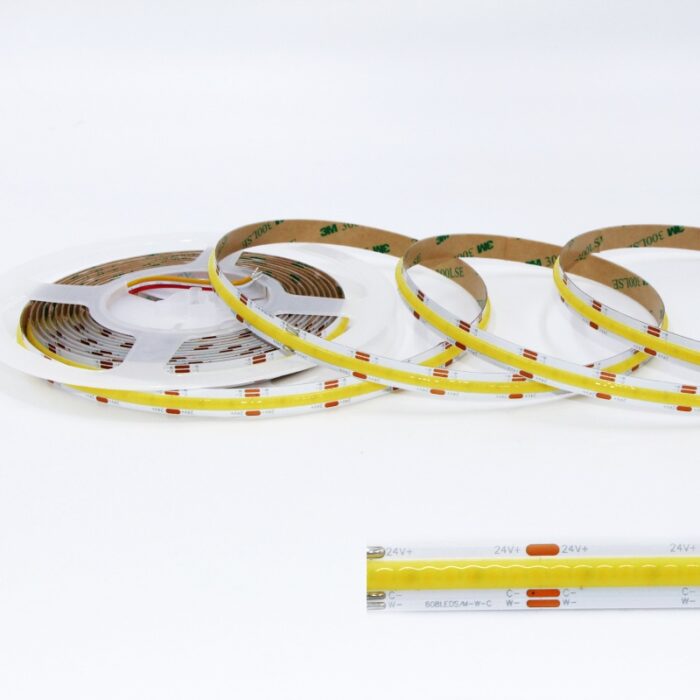
The clearest trend is the migration from entry-level SMD strips to high-density COB configurations in visible applications. Retail fit-outs, hotel corridors, joinery lighting, and residential renovations all reward dot-free illumination, and end clients increasingly recognize the difference. According to industry observation, replacement and renovation demand now drives a growing share of strip volume in mature markets — and renovation buyers tend to trade up rather than down. Products such as the GPD COB 10mm 608 24V strip exist precisely for this segment: high chip density in a slim profile for shallow profiles and exposed lines.
Efficiency Rules Are Reshaping Product Lines
Regulation is the second force. Ecodesign requirements in the EU and state-level efficiency programs in the US keep raising the bar for luminaires and, by extension, for the strip modules that go into them. According to industry observation, factories are responding with better drivers, higher-efficacy configurations, and cleaner data sheets. For buyers the practical effect is simple: efficacy and photometric data are no longer optional attachments to a quotation — they are selection criteria that will follow your product through its market life.
Pricing and the Sourcing Climate
On the sourcing side, the climate rewards planning. Raw material movement, holiday production calendars, and peak-season capacity all influence price and lead time, as covered in our earlier supply chain analysis. According to industry observation, buyers who share rolling forecasts with their factories consistently secure better capacity and more stable pricing than those who buy spot. The COB LED strip range is a good illustration of why specification continuity matters when you plan across seasons.
Regional Patterns Worth Tracking
Demand does not move in lockstep across regions, and blended market commentary can hide that. In Europe, renovation and energy-driven upgrades dominate, which favors high-efficacy, well-documented products. In the United States, residential decoration and commercial refreshes run on different cycles, and buyers expect NRTL-listed options for installed work. Project-driven markets in the Middle East and Australia tend to concentrate volume into fewer, larger tenders with strict IP and voltage requirements. According to industry observation, suppliers who keep regional variants — voltage, IP rating, CCT preferences — ready in their catalogs respond faster to these shifts without re-engineering product lines.
What Buyers Should Watch Next
- Density and uniformity tiers — chip-per-meter counts keep climbing; match density to profile depth instead of defaulting to the top option.
- Color quality expectations — CRI 90+ and consistent binning are becoming standard asks in commercial tenders.
- Specialized IP configurations — waterproof variants grow as outdoor and landscape applications expand; verify aging and IP test data.
- Certification readiness — keep EU and US documentation current with each model revision, as outlined in our certification guide.
More testing background and selection notes are collected in our Technical Support knowledge base.
Frequently Asked Questions
Is COB replacing SMD LED strip lights?
In visible and reflective applications, largely yes — that is where the demand shift is strongest. SMD remains common for coves, indirect lines, and budget segments where dots stay hidden.
Will strip light prices rise or fall this cycle?
According to industry observation, pricing tracks raw materials and capacity more than any single trend. Buyers with forecasts and agreed adjustment windows are the least exposed to surprises.
Which applications drive most demand growth?
Renovation and upgrade projects, retail and hospitality refreshes, and specialty applications — smart equipment, vehicles, and display lighting — keep adding volume on top of traditional decoration demand.
Do these trends change which certifications I need?
Indirectly, yes. As efficiency rules tighten and product categories evolve, certification scope can shift with each revision. Re-confirm documentation whenever you switch models, voltages, or factories rather than assuming last year’s paperwork still applies.
Following the market with a sourcing plan? GPD Technology manufactures COB and SMD LED strip lights in Shenzhen and supports importers, contractors, and distributors with specification guidance, samples, and documentation. Contact our team to align your next order with where the market is heading.
LED Strip OEM ODM Sourcing Insights: A Practical Guide
Private-label and custom LED strip programs are where importers either build durable margin or slowly lose their differentiation. According to industry observation, more distributors and lighting brands are moving from catalog purchases to factory-direct OEM and ODM cooperation — yet many still treat “OEM” and “ODM” as the same thing, and only discover the difference after samples, lead times, or intellectual property go wrong. These LED strip OEM ODM sourcing insights summarize how the two models differ, how to evaluate a factory, and which customization options actually deserve your budget.
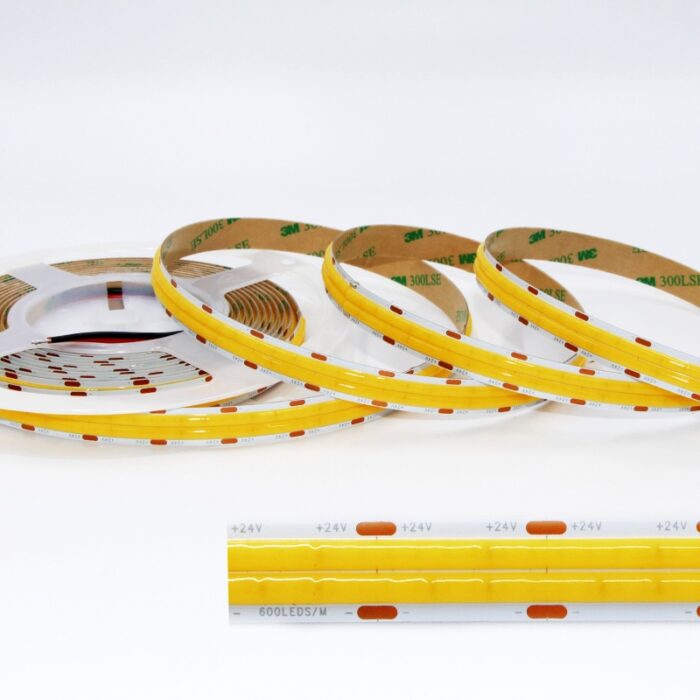
OEM and ODM Are Two Different Commitments
In an OEM relationship, you bring a defined specification and the factory builds to it under your brand. In an ODM relationship, the factory contributes the design: existing platforms, engineering adjustments, and tooling that you customize rather than invent. For LED strip lights the practical dividing line is who owns the specification. If your team defines the FPC width, chip density, voltage, CCT, and packaging, you are buying OEM. If you start from the factory’s platform and adapt it, that is ODM — usually faster and cheaper, but with shared designs your competitors may also access unless you negotiate exclusivity.
How to Evaluate an LED Strip Factory
Factory evaluation for strip lights should focus on process ownership. Ask which steps happen in-house: SMT or COB bonding, phosphor coating, aging, IP encapsulation, and QC. A factory that controls bonding and aging can react to quality issues within days; one that outsources them will always point upstream. Request a walk-through of QC equipment — colorimeters for binning control, aging racks that run full reels, and IP test gear if you buy waterproof configurations. According to industry observation, factories with in-house engineering support also resolve customization questions faster, which matters more than a marginally lower unit price. The COB LED strip range on our site reflects what a vertically organized program looks like in catalog form.
Customization Options Worth Asking For
LED strip customization is modular, and not every option carries the same cost or lead-time impact:
- Electrical basics — voltage (12V/24V), chip density, and wattage per meter; 24V high-density builds such as the GPD COB 12mm 600D 24V 24W strip suit long runs with demanding uniformity.
- Light quality — CCT range, CRI tier, and binning strategy; these define perceived quality more than raw output.
- Mechanical and environmental — PCB width and color, cut points, connector types, and IP rating for the installation environment.
- Brand experience — private-label reels, instruction sheets, and retail packaging; low-cost changes with high shelf impact.
According to industry observation, electrical and light-quality changes reuse existing materials and add little lead time, while new IP encapsulation or custom FPC tooling moves schedules — plan those earlier.
Protect Your Designs and Your Margin
OEM and ODM cooperation only pays off if the assets you create stay yours. Sign NDAs before sharing specifications, agree in writing whether tooling and phosphor formulations are exclusive to your orders, and keep a locked specification document that references your test reports — the compliance paperwork described in our Technical Support knowledge base is part of that package. Buyers who skip this step often find their “custom” strip quoted to competitors within a season.
Frequently Asked Questions
What MOQ should I expect for OEM or ODM strip lights?
Standard platforms adapted to your brand usually carry low or no effective MOQ beyond normal batch sizes. Fully custom FPC or packaging typically needs higher volumes to justify tooling; ask suppliers to separate tooling cost from unit cost so you can compare honestly.
How long does OEM sampling take?
For adaptations of existing platforms, samples are commonly ready within a few weeks according to industry observation; fully custom configurations take longer because materials must be procured before assembly can start.
Can my brand appear on the product itself?
Yes in most cases — printed reels, retail boxes, and instruction sheets are standard private-label options. Confirm trademark authorization and artwork formats early so packaging does not become the bottleneck.
Planning an OEM or ODM strip program? GPD Technology manufactures COB and SMD LED strip lights in Shenzhen with in-house bonding, aging, and IP lines, supporting private-label and custom configurations for importers, brands, and contractors. Contact our team to start with samples and a specification review.
LED Strip Supply Chain Analysis: What Importers Should Know
For importers of LED strip lights, supply chain decisions have quietly become as important as product decisions. According to industry observation, the past two years have reshaped how LED strip lights are sourced: chip allocation, copper and FPC costs, freight cycles, and holiday production calendars all now move prices and lead times in ways that a purchase order alone cannot control. This LED strip supply chain analysis maps where the chain is most exposed and what importers, contractors, and distributors can do to stay ahead of it.
How the LED Strip Supply Chain Is Structured
A strip light travels through several hands before it reaches an installation. Upstream sit the LED chip makers and packaging houses, alongside suppliers of flexible copper-clad FPC material, phosphor mixes, resistors, and pressure-sensitive adhesive. The midstream is the strip factory itself, where chips are bonded or reflowed onto the FPC, coated, aged, and cut. Downstream come drivers, connectors, dimmers, and finally freight forwarders. Each layer adds lead time, and the layers with the least inventory — usually chips and specialty FPC — are the ones that wobble first when demand spikes.
What Moves Costs and Lead Times
According to industry observation, three forces dominate. First, raw material drift: copper and FPC substrate prices flow directly into strip costs, while gold used in bonding affects chip pricing upstream. Second, capacity cycles: high-density COB lines and popular color temperatures sell out first ahead of peak seasons. Third, logistics swings that change the total landed cost even when the ex-works price holds. None of these moves on a fixed schedule, which is why a static price list ages quickly in this category.
Sourcing Implications for Importers and Distributors
The practical response is to buy structure, not just product. Buyers who source COB LED strip lights directly from manufacturers — rather than through trading layers — see problems earlier and get capacity reserved sooner. Two habits stand out. Keep a rolling forecast shared with your factory so chip and FPC purchases can start before your own stock runs low. And qualify a second specification, not only a second supplier, so a disruption on one model does not stop your projects. Our GPD COB 10mm 480D 24V 14.5W strip page shows the specification depth that makes such qualification faster, and the full COB LED strip range gives alternates within one documentation standard.
A Short Checklist Before Your Next Order
- Confirm production windows around major holidays and ask how far in advance materials are ordered.
- Agree on price-adjustment triggers for copper or chip movements instead of absorbing surprise surcharges.
- Hold safety stock on fast-moving SKUs and accept longer lead times only for custom configurations.
- Keep documentation with the goods — test reports and declarations travel with the shipment, as covered in our earlier certification guide.
Supply chains reward buyers who communicate early and penalize those who negotiate late. Background on specifications and testing is available in our Technical Support knowledge base.
Frequently Asked Questions
Which part of the LED strip supply chain causes the most delays?
According to industry observation, chip allocation and specialty FPC material are the most common bottlenecks, especially for high-density COB configurations during peak season.
Should importers hold their own inventory?
For fast-moving SKUs, yes. Safety stock on standard models paired with factory-side material reservations covers most demand spikes without tying up capital on custom items.
How far ahead should a seasonal order be placed?
As a rule of thumb used across the trade, place seasonal orders early enough for materials to be purchased and strips to be aged and tested — typically well before the peak shipping period begins.
Looking for a stable LED strip supply partner? GPD Technology manufactures COB and SMD strip lights in Shenzhen, supports forecast-based production planning, and ships worldwide for importers, contractors, and distributors. Contact our team to discuss your sourcing plan.
LED Strip Certification Requirements EU US: Buyer Guide
For importers of LED strip lights, certification is where compliance, cash flow, and delivery schedules intersect. According to industry observation, shipments between the EU and US are still delayed more often by paperwork gaps than by product faults: a missing Declaration of Conformity, a test report that does not match the invoice model, or markings that never made it onto the product. This guide summarizes LED strip certification requirements in the EU and US markets and lists the documents to demand from your supplier before wiring a deposit.
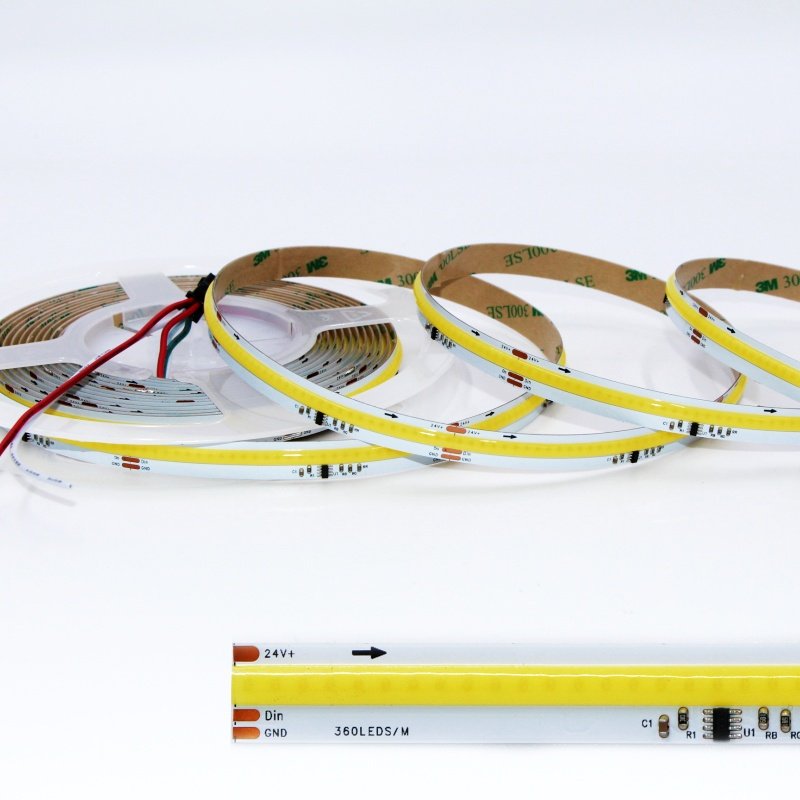
Which Certifications Does the EU Require?
For mains-powered LED strip systems sold in the European Union, the CE marking is the baseline. It is a self-declaration backed by compliance with the Low Voltage Directive, the EMC Directive, and RoHS — supported by test reports rather than a stamp from a lab. Great Britain requires UKCA for products placed on its market. Energy-related rules such as ecodesign requirements apply to finished luminaires, and buyers of strip components should confirm with their suppliers how the rules are passed through. According to industry observation, many EU importers are also preparing for the upcoming digital product passport era under the Ecodesign for Sustainable Products Regulation, which will make traceable product data even more important.
What Does the United States Expect?
The US takes a different route: there is no single federal approval for LED strip lights, but safety certification from a Nationally Recognized Testing Laboratory (UL or ETL) is the de facto requirement — inspectors, retailers, and certification bodies for larger installations expect to see it. Smart or addressable strip systems with wireless control also fall under FCC rules for unintentional radiators. On the energy side, state-level efficiency programs, most visibly in California, keep pushing efficacy requirements upward, which favors higher-density COB and well-driven SMD designs.
Documents to Request From Your Supplier
Experienced buyers treat documentation as part of the product. Before releasing payment, ask for:
- Test reports that match your exact model — including rated voltage, wattage per meter, and IP rating, not a similar family reference.
- The EU Declaration of Conformity — signed by the manufacturer and covering the directives relevant to the product.
- Valid, in-scope certificates — check certificate numbers, validity dates, and whether the certified configuration matches what you order.
- Correct product markings — rated input, trade mark, and traceability codes printed on the strip, reel, or retail box where applicable.
A useful benchmark: the GPD COB 10mm 360D 24V 11W strip ships with documentation structured for EU and US import programs, and the wider COB LED strip range follows the same documentation standard.
Common Pitfalls That Delay Shipments
Three issues cause most of the trouble observed in trade practice. First, model mismatch: the certificate shows one SKU while the invoice shows another, which customs officers and retail auditors read as no certificate at all. Second, recycled reports — documents copied from a different factory or an expired project. Third, assuming one approval covers every market: CE does not open the US market, and a UL file does not satisfy EU directives. Planning certification together with production, not after it, is what keeps delivery dates realistic. More background is available in our Technical Support knowledge base.
Frequently Asked Questions
Is CE marking accepted in the United States?
No. CE applies to EU and related markets. US customers typically expect a safety listing from a Nationally Recognized Testing Laboratory such as UL or ETL, plus FCC compliance for products with radio or digital circuitry.
Who is responsible for compliance — the factory or the importer?
In both the EU and the US, the importer of record carries the legal responsibility. The manufacturer supports the process with test data and declarations, which is why document quality matters when choosing a supplier.
How long does certification take for a new strip model?
According to industry observation, testing and paperwork for a new model usually takes weeks rather than days. Product families with existing reports can be extended much faster, which is worth confirming during supplier selection.
Sourcing certified LED strip lights for the EU or US? GPD Technology manufactures COB and SMD strip lights in Shenzhen with documentation packages prepared for import programs, OEM/ODM configurations, and sample testing. Contact our sales team to request certificates and a quotation.
COB LED Strip Technology Development: A B2B Guide
Over the past few seasons, purchasing teams and lighting specifiers have quietly shifted attention from conventional SMD strip lights to chip-on-board solutions. According to industry observation, COB LED strip technology development has moved from a niche experiment to a mainstream option for retail, hospitality, and architectural projects where smooth, dot-free light matters. This article explains what COB strip lights are, how the technology developed, why B2B buyers increasingly specify it, and what to check before sourcing — so you can brief suppliers with confidence.
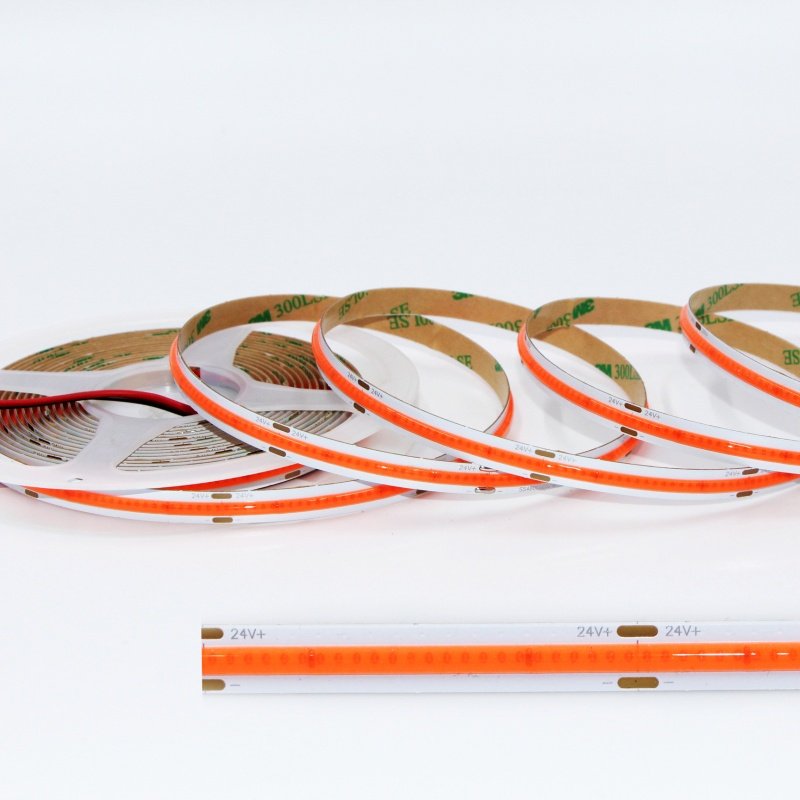
What Is COB LED Strip Technology?
COB stands for chip-on-board. Instead of soldering individual packaged SMD LEDs onto a flexible printed circuit (FPC), COB LED strip lights bond bare LED chips directly onto the board and cover them with a single phosphor gel layer. The whole strip surface becomes one continuous emitter: light comes out as an even line rather than a row of separate points.
For installers this changes the visual result fundamentally. On glossy tiles, marble, or polished metal — surfaces that reflect every LED dot — a COB strip reads as a clean light line, which is why lighting designers often request it for exposed profiles, mirror backlights, and high-end shelving.
How COB LED Strip Technology Development Progressed
The development path is easy to follow. Early flexible strips used 3528 or 5050 SMD packages, which were cheap but produced visible dots and uneven color. High-density SMD designs narrowed the gap, yet the real breakthrough came when manufacturers moved the chips under the phosphor layer. According to industry observation, mainstream COB strips have since climbed from roughly 320 chips per meter to 480–608 chips per meter, with 24V constant-voltage designs becoming the default for longer runs.
Three areas improved the most along the way: light efficacy, color rendering (CRI 90+ is now widely available), and reliability — thicker double-layer FPCs, better thermal adhesives, and more consistent binning. You can browse a typical COB LED strip product range to see how these generations look today.
Why B2B Buyers Are Specifying COB
For project buyers the appeal is practical rather than fashionable. First, uniform output removes the need for extra diffusers in many fixtures, which simplifies assembly and lowers installed cost. Second, light quality sells: in retail displays and hotel corridors, a seamless light line reads as premium. Third, fewer soldered packages mean fewer potential failure points on the board.
In the usual COB vs SMD comparison, SMD strip lights still make sense for coves, budget renovations, and indirect lighting where dots stay hidden. COB earns its premium wherever the strip is seen directly or reflected — a distinction experienced importers now build into their catalogs.
What to Check Before Sourcing COB LED Strips
Because the market has crowded quickly, quality varies noticeably between factories. Before placing an order, experienced buyers typically verify:
- Color consistency across batches — ask how the supplier controls binning, not just for one sample roll.
- Real CRI data — request test reports instead of relying on listing claims.
- Voltage drop — on 24V strips, check brightness at the far end of a five-meter run.
- FPC and adhesive quality — copper thickness and tape grade decide long-term reliability.
- Certification for your market — confirm CE, UKCA, or UL paperwork applies to the exact model you order.
A concrete reference point helps: products such as the GPD COB 10mm 480D 24V strip show the specification level serious buyers should expect from this generation. More testing background is available in our Technical Support knowledge base.
Frequently Asked Questions
Is COB always better than SMD?
No. For hidden coves and budget projects, SMD remains cost-effective. COB wins when the light source is visible or reflected and uniformity matters.
Can COB LED strip lights be dimmed?
Yes. Match the strip to a compatible constant-voltage dimmable driver, and check minimum load and flicker performance before mass production.
What densities and voltages are common?
Mainstream COB strips commonly run from about 320 to 600+ chips per meter, with 24V preferred for longer runs and 12V for short, cut-heavy segments.
Need COB strip lights for your next project? GPD Technology manufactures COB and SMD LED strip lights in Shenzhen with OEM/ODM support, custom lengths, and sample testing for importers, contractors, and distributors. Contact our team for samples and a quotation.
GPD LED Strip Lights Add a Touch of Brilliance to the Home
GPD LED strip lights add a touch of brilliance to the home, mainly in the following aspects:
Ambient Lighting: LED strips can serve as a primary ambient lighting tool, providing soft and even light that helps create a comfortable, cozy home atmosphere. This lighting approach suits modern home decor styles, emphasizing the integration of light effects and furniture, and has largely replaced traditional bulb lighting.
Decorative Effect: LED strips offer a variety of color and lighting-effect options, such as color changing, gradients, and flashing, which can create diverse decorative effects and add interest to living spaces. For example, by choosing waterproof LED strips in attractive colors such as red or orange, you can illuminate a space and provide a dramatic effect.
Flexible Application: Owing to their eco-friendly, low-energy consumption, cuttable, and bendable characteristics, LED strips are widely used in modern home lighting design. These features allow LED strips to adapt to different home layouts and decorative needs, thereby adding a touch of brilliance to the home.
Smart Control: Some LED light strips can be integrated into a smart lighting series, controlled jointly via a remote control or smartphone application. This intelligent control method not only facilitates user operation but also allows light effects to be adjusted as needed, further enhancing home comfort and aesthetics.
Through their characteristics of ambient lighting, decorative effect, flexible application, and smart control, GPD LED strip lights can indeed add a touch of brilliance to the home, making the living space more warm and comfortable.
GPD LED Strip Lights: Innovative Technology Illuminating the Future
Since its establishment, Shenzhen GPD Technology Co., Ltd. has focused on the R&D, manufacturing, and sales of LED strip lights, including flexible LED strips, rigid LED bars, and automotive LED strips.
Leveraging its outstanding technological R&D and manufacturing capabilities, as well as keen market insight, GPD provides a wide range of high-quality products and services to China’s LED product R&D and manufacturing sector. The company’s product portfolio includes not only traditional LED strips but also accessories such as LED strip controllers, demonstrating its comprehensiveness in technological innovation.
In terms of innovation and development of LED lighting technology, innovation in LED lighting is first reflected in energy efficiency. Compared with traditional incandescent and fluorescent lamps, LED lamps offer higher efficacy, converting most electrical energy into light and reducing energy consumption. Furthermore, with the rapid advancement of technology and the booming smart home market, LED lighting technology is being driven toward intelligentization and convenience. For example, Jindingsheng Lighting’s technological innovation combines lighting with smart technology, developing smart LED lamp products capable of remote control, timed switching, and light sensing.
Through continuous technological innovation and market expansion, GPD Technology Co., Ltd. has become an emerging force in China’s LED product R&D and manufacturing. The company’s success is reflected not only in the high quality and broad application of its products, but also in its accurate grasp of industry trends and sustained investment in future technological innovation. With the continuous advancement of LED lighting technology and the expanding market demand, GPD Technology Co., Ltd. is expected to continue leading the innovative development of the LED strip industry in the future.
Dimmable LED Strip Lights: Adjustable Brightness for Every Mood & Scene
Fixed-brightness lighting often limits the comfort of your living space — too bright for relaxation and too dim for daily work. Dimmable LED strip lights solve this problem perfectly by offering full brightness flexibility, letting you tailor lighting intensity to match any moment. As a must-have upgrade for modern homes, these adjustable strips balance practical task lighting and cozy ambient decor, far outperforming traditional fixed lighting fixtures. The core feature of dimmable LED strip lights is seamless brightness adjustment. You can freely dim the light from 1% to 100% without flickering or uneven illumination. Need sharp, bright lighting for reading, cooking, or makeup? Maximize the brightness for clear, detailed visibility. Want soft, warm glow for bedtime relaxation, movie nights, or quiet evenings? Dim the lights gently to create a soothing, low-glare atmosphere. This all-scene adaptability makes them ideal for every room in your home. These adjustable strips greatly improve eye comfort and protect your vision. Harsh, unchangeable bright light causes eye strain, dryness, and fatigue during long-term use, while overly dim light affects concentration. Dimmable LED strips deliver stable, flicker-free soft light with customizable intensity. They eliminate strong light contrast, making them perfect for study rooms, work desks, bedrooms, and kid’s rooms, bringing gentle and eye-friendly lighting for all-day use. Equipped with user-friendly control methods, these lights suit all usage habits. You can adjust brightness via remote control, mobile app, or smart voice assistants like Alexa and Google Home for hands-free operation. Most models support customized timing settings, allowing you to set gradual dimming at night and slow brightening in the morning. This natural lighting transition fits your body rhythm and improves sleep quality effectively. Energy efficiency is another outstanding advantage. Unlike ordinary lights that waste power by staying fully bright all the time, dimmable LED strip lights reduce power consumption when dimmed. Lower brightness means lower energy use, helping you cut down monthly electricity bills easily. Paired with a long service life and stable performance, they become a cost-effective, eco-friendly lighting solution for long-term home use. Ultra-flexible and easy to install, these strips fit diverse scenarios. With bendable bodies and strong self-adhesive backing, they can be installed under cabinets, behind TVs, along ceiling edges, and on headboards without drilling. Compatible with RGB and warm white options, they support both functional lighting and aesthetic decoration for homes, studios, and commercial spaces. If you crave flexible, comfortable, and energy-saving lighting that adapts to your daily routine, our dimmable LED strip lights are the perfect pick. Customize your space brightness and enjoy a smarter, cozier living experience every day.
24V LED Strip Lights: Stable, High-Brightness Lighting for Long Runs
When upgrading your home or commercial lighting, voltage stability is key to smooth, flicker-free illumination. While 12V LED strips work for short-distance decoration, 24V LED strip lights are the premium choice for longer lighting runs, brighter output, and more stable performance. Ideal for large room renovations, cabinet lighting, outdoor decor, and commercial displays, they deliver consistent lighting quality that standard low-voltage strips cannot match.
The most significant advantage of 24V LED strip lights is their superior voltage stability. Longer LED strips often suffer from voltage drop, causing dimmer lights and uneven color at the tail end. Thanks to higher operating voltage, 24V strips effectively reduce voltage loss over long distances. Even when installed in full-length layouts for ceilings, corridors, and large cabinets, they maintain uniform brightness from start to finish, with no dark segments or inconsistent glow.
Built for higher brightness and better load capacity, 24V LED strips offer stronger and more concentrated illumination. They provide brighter, clearer light while remaining flicker-free and eye-friendly, perfect for functional task lighting as well as aesthetic ambient lighting. Whether you need bright under-cabinet lighting for food preparation, soft continuous glow for bedroom ambiance, or vivid accent lighting for store displays, these strips perform steadily and reliably.
Safety and durability make 24V strips a cost-effective long-term investment. As safe low-voltage lighting, they produce extremely low heat after long hours of operation, avoiding overheating risks. The stable circuit structure greatly reduces light decay, burnout, and short-circuit issues. With a longer service life and consistent performance, they require minimal maintenance, helping you save frequent replacement costs.
Flexible and user-friendly installation fits both residential and commercial scenarios. Ultra-thin and highly bendable, 24V LED strips can adapt to curved surfaces, corners, and narrow gaps. The self-adhesive backing allows quick, drill-free installation on walls, ceilings, cabinets, and staircases. You can freely cut the strips at designated marks to customize lengths for your exact space needs, making them perfect for DIY lighting projects.
Versatile in application, 24V LED strip lights suit nearly all indoor and mild outdoor lighting needs. They are widely used for living room ceiling contour lighting, kitchen under-cabinet lighting, bedroom background lighting, long corridor decoration, shop window displays, and studio ambient lighting. Many models support RGB color changing, dimmable brightness, and smart control, allowing you to switch modes freely for daily use, festivals, and parties.
If you are looking for stable, long-lasting, and high-brightness LED strips for large or long-distance lighting layouts, our 24V LED strip lights are the ideal solution. Enjoy uniform illumination, reliable safety, and flexible DIY design to upgrade your space with professional-quality lighting.
What Is CRI? Why High CRI COB LED Strips Elevate Your Lighting Projects
When sourcing premium LED strip lights for commercial, residential, and architectural lighting, you have likely encountered the term CRI. Many buyers confuse CRI with color temperature, but these are two completely different lighting metrics. While color temperature controls whether light looks warm or cool, CRI determines how true and vivid real-world colors appear under illumination. For high-end interior design, retail displays, and professional projects, high CRI is non-negotiable. Today, we break down what CRI is and why high CRI COB LED strips stand out from standard lighting solutions.
What Is CRI (Color Rendering Index)?
CRI, short for Color Rendering Index, is a universal lighting metric that measures a light source’s ability to reproduce the natural colors of objects compared to pure natural daylight, which holds a perfect CRI score of 100 . It is scored on a scale from 0 to 100. The higher the CRI value, the more accurately and naturally colors are displayed, with zero color distortion or dullness .
A common misconception is that bright light equals clear color rendering. In fact, low-quality LED lights can be extremely bright but wash out reds, greens, and skin tones, making spaces look flat and unnatural. CRI focuses purely on color fidelity, not brightness or light tone.
What Is High CRI? CRI Rating Standards
In the LED lighting industry, CRI rankings follow clear industry standards, directly guiding project selection:
- CRI Ra 70–80 (Standard Grade): Basic entry-level LED lights for warehouse, garage, and low-budget industrial lighting. Colors appear faded and distorted, unsuitable for visible decorative spaces .
- CRI Ra 80–85 (Medium Grade): The most common mainstream rating for general home and office lighting, delivering acceptable color performance for daily use.
- CRI Ra 90+ (High CRI): Defined as high CRI lightingin premium lighting standards. It restores natural, vivid colors with minimal deviation, meeting the requirements of high-end commercial and architectural lighting .
- CRI Ra 95+ (Ultra-High CRI): Top-tier color rendering, ideal for luxury retail, art galleries, studios, and high-end villa decoration with strict color accuracy demands .
For most European commercial and residential projects (Germany, France, and other EU markets), Ra90+ high CRI has become the mainstream premium lighting benchmark.
High CRI vs. Standard CRI COB LED Strips: Key Differences
Traditional low-CRI LED strips often cause color distortion: wooden floors look dull, wall paint loses its original tone, and human skin looks pale. In contrast, our high CRI COB LED strips (Ra90+) deliver unmatched advantages:
- True-to-life color restoration: Restores the original texture and color of furniture, fabrics, artworks, and architectural details, creating a natural daylight-like lighting atmosphere .
- Eye-friendly & comfortable: High CRI lighting reduces visual fatigue effectively, with no color cast or glare, perfect for long-hour indoor environments.
- High-end project matching: Ideal for hotel decoration, shopping mall display lighting, ceiling ambient lighting, and high-end office renovation, greatly improving project grade.
- Stable & consistent performance: Our high CRI COB strips maintain stable color rendering long-term, no color fading after long working hours, complying with EU CE, RoHS standard requirements.
Where to Use High CRI COB LED Strips
High CRI lighting is essential for scenarios that pursue texture and authenticity:
- Commercial spaces: Retail stores, boutique displays, cafes, and exhibition halls
- Residential luxury decoration: Villa ceilings, TV background walls, and custom ambient lighting
- Professional spaces: Art galleries, photography studios, and office fine lighting
Final Verdict
CRI is the core standard to judge lighting color quality, and Ra90+ high CRI is the key to distinguishing ordinary LED strips from premium commercial-grade COB LED strips. For European customers focusing on lighting texture, environmental comfort, and project quality, high CRI is no longer an option but a basic requirement for high-quality lighting projects.
Our wholesale high-density COB LED strips feature stable Ra90+ high CRI, 24V low voltage, dimmable design, and full EU certifications. Support OEM/ODM customization for global commercial lighting projects. Contact us for detailed parameters and bulk pricing today!
GPD LED Strip Lights Add a Touch of Brilliance to the Home
GPD LED strip lights add a touch of brilliance to the home, mainly in the following aspects:
Ambient Lighting: LED strips can serve as a primary ambient lighting tool, providing soft and even light that helps create a comfortable, cozy home atmosphere. This lighting approach suits modern home decor styles, emphasizing the integration of light effects and furniture, and has largely replaced traditional bulb lighting.
Decorative Effect: LED strips offer a variety of color and lighting-effect options, such as color changing, gradients, and flashing, which can create diverse decorative effects and add interest to living spaces. For example, by choosing waterproof LED strips in attractive colors such as red or orange, you can illuminate a space and provide a dramatic effect.
Flexible Application: Owing to their eco-friendly, low-energy consumption, cuttable, and bendable characteristics, LED strips are widely used in modern home lighting design. These features allow LED strips to adapt to different home layouts and decorative needs, thereby adding a touch of brilliance to the home.
Smart Control: Some LED light strips can be integrated into a smart lighting series, controlled jointly via a remote control or smartphone application. This intelligent control method not only facilitates user operation but also allows light effects to be adjusted as needed, further enhancing home comfort and aesthetics.
Through their characteristics of ambient lighting, decorative effect, flexible application, and smart control, GPD LED strip lights can indeed add a touch of brilliance to the home, making the living space more warm and comfortable.
Innovative Lighting Technology: GPD LED Strip Lights Lead the Trend
As a representative of innovative lighting technology, the reasons why GPD LED strip lights lead the trend can be analyzed from multiple perspectives. First, the global LED strip market continues to grow and is expected to maintain steady expansion in the coming years. This demonstrates the worldwide recognition and application of LED lighting technology, providing ample market space for companies such as GPD.
Trends in LED lighting technology include higher voltage operation, intelligentization, and deep integration with information technology. These advances not only improve LED strip performance—such as continuously rising luminous efficacy—but also make LED lighting products more energy-efficient, eco-friendly, safe, and reliable, meeting the market’s demand for high-efficiency, intelligent lighting.
Leveraging its outstanding technological R&D and manufacturing capabilities, as well as keen market insight, the company has successfully provided customers with a large volume of high-quality LED lighting products. This strong technical R&D capability and market competitiveness are key factors enabling GPD to lead the trend.
Furthermore, with the accelerating development of digitalization and intelligentization, cross-industry convergence in the LED lighting industry has become an inevitable trend. Through continuous technological innovation and product upgrades, GPD can better adapt to this development trend and meet the market’s demand for intelligent lighting solutions.
GPD LED strip lights lead the trend mainly thanks to the sustained growth of the global LED lighting market, the rapid development of LED lighting technology, and GPD’s own strong technical R&D capability and market competitiveness. These factors work together to give GPD a leading position in the LED lighting industry.
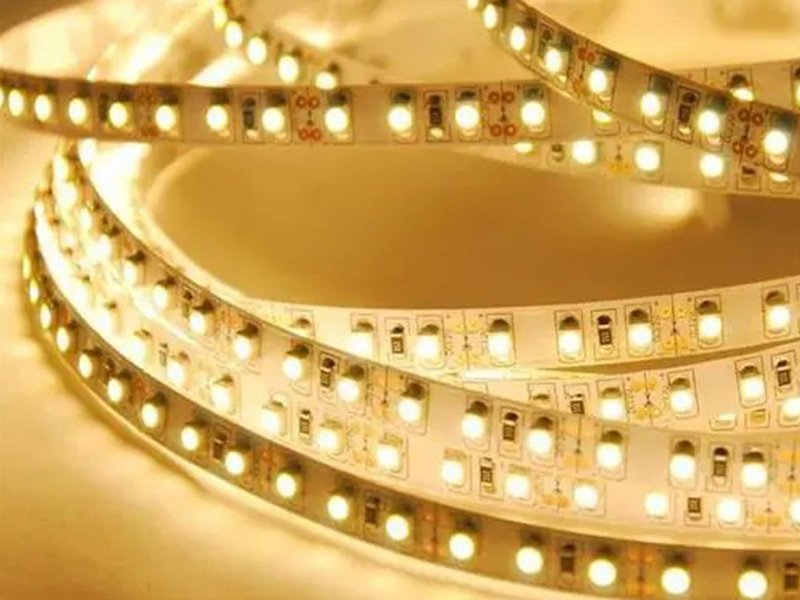
An Energy-Saving, Eco-Friendly New Choice: GPD LED Strip Lights Take the Stage
As an energy-saving and eco-friendly new choice, GPD LED strip lights owe their debut to the continuous advancement of LED technology and growing market demand. According to relevant reports, the global LED strip light market was valued at approximately USD 54.1788 billion in 2021 and is projected to reach USD 81.23036 billion by 2027, with a CAGR of 6.98% during the forecast period. This data indicates steady growth in the LED strip market, reflecting the widespread adoption and acceptance of LED lighting technology.
Shenzhen GPD Technology Co., Ltd., established in August 2010, is an enterprise focused on the R&D, manufacturing, and sales of LED luminaires, LED strip lights, and other products. Leveraging its outstanding technological R&D and manufacturing capabilities, as well as keen market insight, the company provides customers with a large volume of high-quality LED products. GPD’s product features include low power consumption and excellent waterproof performance, making its LED strips an energy-saving and eco-friendly choice.
LED technology itself is regarded as a symbol of energy efficiency and environmental protection. With its key advantages of energy savings and eco-friendliness, LED light sources are widely applied in various lighting scenarios worldwide. Compared with traditional lighting technologies, LED technology can significantly reduce energy consumption and carbon emissions, achieving energy-saving and eco-friendly goals. This is demonstrated in the application of smart light poles, which adopt LED light sources to significantly reduce the energy consumption and carbon emissions of urban lighting.
As an energy-saving and eco-friendly new choice, GPD LED strip lights benefit not only from the inherent energy-saving and eco-friendly properties of LED technology, but also from GPD’s strength and market positioning in product R&D, manufacturing, and sales. With the continuous advancement of LED technology and growing market demand, GPD LED strip lights are expected to occupy a more important position in the global market.
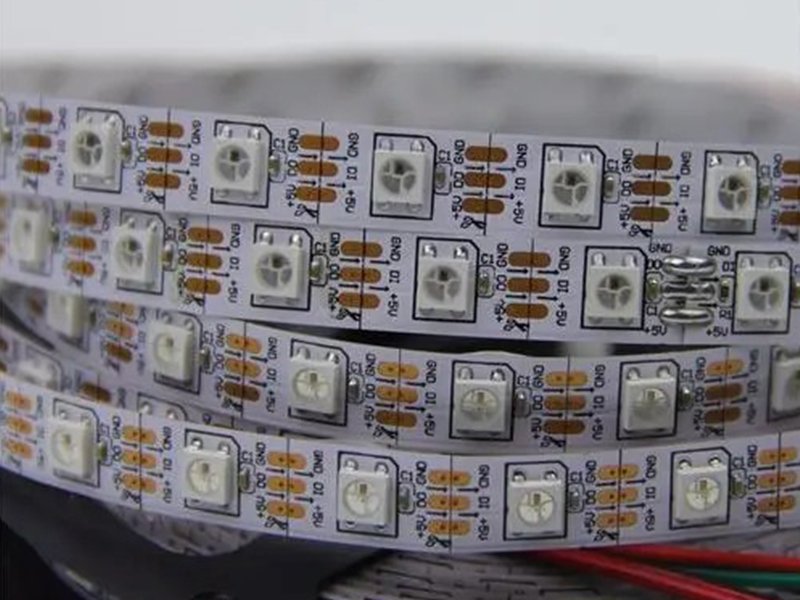
Certified Under the Quality Management System and Awarded the Certificate
To further standardize the company’s production, R&D, and sales operations, effectively control risks, and improve return on investment, thereby establishing a standardized operation and management model, the company took a strategic approach and began implementing the ISO 9001 Quality Management System in 2016. It successfully passed the certification and audit of the ISO 9001 Quality Management System by the China Quality Certification Centre, and was awarded the ISO 9001 Quality Management System certificate on July 27, 2017.
On September 23-24, 2016, an expert panel for the on-site inspection and acceptance of the quality management system certification, organized by the Guangdong Certification and Review Centre, conducted a comprehensive audit and review of our company’s quality management. Through two days of intensive work, the panel identified no critical non-conformities during the on-site inspection and acceptance, and the overall evaluation fully met the requirements of the quality management system certification, thus passing the on-site inspection and acceptance. During the process, adhering to the principles of fairness and impartiality and with a serious, responsible attitude, the panel evaluated the company item by item against relevant national regulations, mainly covering the quality management system, personnel hygiene, material storage and issuance, production management, validation and qualification, deviation and change investigation and handling, production processes, product shipment and recall, and documentation systems. Through report briefings, comprehensive document review, on-site observation, group inquiries, and individual spot checks, the experts gained a full understanding of the actual status of each inspected item, leaving no detail unchecked, thereby reaching an objective, truthful, and accurate evaluation. Shenzhen GPD Technology Co., Ltd. successfully passed the on-site inspection and acceptance with its sound quality management system and standardized quality management procedures.
The successful passing of the company’s ISO 9001:2015 certification fully demonstrates the united and enterprising spirit of its employees, and is the result of the joint efforts of all staff. It also reflects that our team is cohesive, capable of tackling tough challenges, and full of vitality! We believe that we will achieve even more remarkable results in the future!
Becoming an Institutional Member of the China Entertainment Technology Association
On June 20, 2017, Shenzhen GPD Technology Co., Ltd. officially joined the China Entertainment Technology Association (CETA) as an institutional member, marking a new level of the company’s technical strength and overall capability, and gaining recognition from industry peers.
The China Entertainment Technology Association is the most authoritative technical association in the industry! Founded in 1991 and supervised by the Ministry of Culture of the PRC, CETA is a national first-tier social organization with legal personality, serving as the authoritative representative body of China’s entertainment equipment industry and leading the coordination of the nation’s entertainment equipment economic and technological development. In the China Social Organization Evaluation organized by the Ministry of Civil Affairs, CETA was honored with the highest rating—the “5A” national industry association distinction.
CETA has over 1,300 institutional members (as of March 2011), distributed across the country, all engaged in R&D, manufacturing, distribution, and engineering within the entertainment equipment industry, gathering numerous outstanding enterprises in professional lighting, Chinese and Western musical instruments, audio/video, and venue equipment. It also has more than 140 individual members, including professors, experts, renowned figures, and senior engineers from cultural institutions at all levels, art academies, performing arts troupes, research institutes, and leading enterprises.
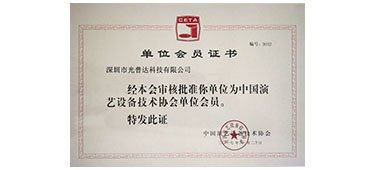
GPD LED Strip Lights Illuminate the Brilliance of Life
GPD LED strip lights add brilliant splendor to everyday life with their premium quality and diversified product range. LED strips are widely used in applications including, but not limited to, residential decoration, hotel accent lighting, retail display and point-of-purchase lighting, outdoor construction lighting, as well as transportation sectors such as aviation and vehicle lighting zones, traffic signals, and road signage. Moreover, the use of LED strips in the medical field should not be overlooked, including operating rooms, interior lighting, and bedside lighting.
GPD LED strip lights are designed with energy efficiency, long lifespan, and excellent display performance in mind, making them the preferred choice for display across various occasions. Technical parameters and features of LED strips—such as voltage, power, and color temperature—also facilitate their use in different application scenarios. Flexible LED strips offer rich colors and can change color by adjusting current, meeting diverse decoration and lighting needs.
GPD LED strip lights not only meet market demand in terms of technology and quality, but their broad application scenarios also offer unlimited possibilities for illuminating the brilliance of life. Whether for residential decoration, commercial advertising, or specialized professional lighting, GPD LED strip lights can provide suitable solutions, bringing more color and convenience to people’s lives.